• About
  • Content Organized by Life-Style Choices

Purposely Live to120

~ Living to the full potential life-span with full vigor

Category Archives: Nutrition

Post #23 – Eating for Optimal Health Part II – What you eat, how much you eat and when you eat, all matter.

06 Monday Oct 2014

Posted by purposelyliveto120 in Ideal Body Weight, Lean Mass, Living to 120, Nutrition, Optimal Health, Percent Body Fat, wellness

≈ Leave a comment

Tags

Aging, Lifestyle

Eating for Optimal Health Part II – What you eat, how much you eat and when you eat, all matter.

In last week’s blog post: So, what should you eat for optimal health? – Part I, I listed the seven basic principles I have extracted from the many diet books and resources I have studied. These principles are:

  1. What you eat, how much you eat and when you eat, all matter
  2. Eat clean
  3. Eat lots of vegetables and fruits
  4. Use only healthy fats and fat sources
  5. Incorporate sufficient proteins in your diet
  6. Best beverage to drink is pure water
  7. Add or subtract specific foods based on your personal needs

Today, let’s focus on the very first principle: What you eat, how much you eat and when you eat, all matter. And, without any fluff, let’s get to it.

What you eat: Our physical bodies need:

  • Oxygen
  • Water
  • Macro nutrients: carbs, proteins and fats
  • Micro nutrients: vitamins and minerals
  • Enzymes
  • Bacteria
  • Certain molecules

For optimal health, what we eat needs to provide all these items in optimal quantities. If any of these are taken in insufficient quantities, suboptimal health will result.

How much you eat: One aspect of how much to eat is based on how much energy we need every day. The other aspect is to eat so as to receive optimal quantities for our bodies’ needs a) through g) above.

The first aspect about energy, in-turn depends upon two factors. How many Kcals (or Calories) do we need for the basic metabolic activities (beating heart, circulation of blood, breathing, maintaining body temperature etc.). And, for other physical activities which can depend upon our lifestyle, taking elevators vs. taking stairs, number of steps walked in a day, exercise or no exercise, driving to work or biking to work, doing the work manually or letting machines do the work, etc.

And, there is yet another factor that dictates how much to eat question, i.e., how efficiently is your body able to convert food to energy. Basic metabolic cycle, called Krebs Cycle or the Citric Acid Cycle involves myriads of elements to convert carbs, protein and water into energy.

When to eat: While there are many theories as to when to eat, there is one major principle that is well understood and is critical to optimal health: Sugar Management. Body converts carbohydrates into glucose (sugars) before they can be converted to energy using the Krebs cycle. Rate at which carbs convert to sugars depends on the glycemic index of the specific food. And, how much sugar is generated, also called glycemic load, in this process is based on glycemic index and the quantity of food.

Body either uses up all the glucose it generates or it stores away what it cannot use in the form of body fat. For optimal health, one must eat just enough, so that all of it can be converted into stored energy rather than stored fat. This means eating meals more often, if necessary, to not generate excess that will have to be stored away as fat.

Bottom line and My Personal Plan: Given all these factors, you can easily imagine why there is much room for controversy about what to eat, how much to eat and when to eat.

When one expert says, “Just figure out  how many calories you need and then simply eat that many calories.”

Next expert might say, “Not true, because you still need all of the elements 1 through 7 that body needs. That is why, 2500 calories from sodas is not the same as 2500 calories from fruits and vegetables.”

Yet, third expert may argue that if you are missing just a few key ingredients, your energy cycle may be all messed up and nothing else will matter.

So, what is one to do? The best answer, I have synthesized from all those book and resources I mentioned in part I, is as follows. I am here using my personal example to illustrate. These days, my weight is 161 (plus minus 2 lbs.)

  1. Decide how many calories you need to consume in a day, based on your build and life style (usually 2300 calories to 2800 calories):

In my case, I decided about 2500 calories meet my daily need.

  1. If you are not at optimal percent body fat, reduce the calorie in-take by 20%

So in my case, since I am still working on losing body fat, I budgeted 2500 x 80% = 2000 calories

  1. 15% should come from fat

For me, 2000 x 15% = 300 calories. 300/9 = 33 grams of fat

  1. Budget 1 gram per pound of body weight for protein.

For me: 160 grams of proteins. 160gms x 4 cals/ gm = 640 calories

  1. What remains is budget for carbs. Thus, Calories from carbs = Total Calorie budget – fat cals – protein calories. Divide by 4 for number of grams of carbs.

So my daily intake budgets are:

  • Total 2000 calories
  • 300 cals from fat, i.e., 33 gms
  • 640 cals from protein, i.e., 160 gms
  • 1060 cals from carbs, i.e., 265 gms.
  1. Use fruits and vegetables as the basis for carbs that will not only meet carb requirements but also most of the micro nutrients. It is really easy to blow carbs budget with breads and pasta, and most of those also have very high glycemic load.
  2. Use your choice of protein sources for the budgeted amount of protein requirement. Again, be careful in selecting protein sources, since it is very easy to blow the fat budget with poor choice of protein sources.
  3. Break up intake into at least six meals and mix proteins with carbs for each meal to keep sugar level throughout out the day and also prevent spikes after each meal.

For one day, I did a complete journal of what I ate and also using resources on the Internet figured calories for carbs, proteins and fats. This was a particular intense day during my 21-day Muscle Mania challenge. I don’t always do strength training workout with my trainer and Bikram yoga the same day.

Below here is the result. Remember, I am a vegetarian and I have been using Whey Protein as my major source of protein.

You can Click on the picture to enlarge it, if it is not readable.

Meal Planner and Journal for Ashok

What do you think of this approach?

Do you feel that this simplifies the mumbo jumbo of what to eat, how much to eat and when to eat for optimal health?

Do you see a hole in this approach? What would you do differently?

Post #22 – So, what should you eat for optimal health?

29 Monday Sep 2014

Posted by purposelyliveto120 in Aging, Nutrition, Optimal Health, Puposely Living, Vitality, wellness

≈ 2 Comments

So, what should you eat for optimal health? – Part I

That is the million dollar question. Isn’t it? This is such a big and controversial topic that so far I had dared not touch it. There is so much information out there on this topic. It is mind boggling.

Let us start from a simple premise.

Let’s assume for a moment that you can get over all the excuses like: I don’t like the taste of it, or I am a vegetarian, or I cannot live without meat, or but that’s the way I was raised, or but I travel too much, or, I don’t have time to eat healthy, etc., etc., etc.

If the only objective was optimal health and you could follow whatever diet or nutritional plan was optimal, what should you eat?

Well, that is the question I have been asking and answer I have been searching for quite a while now.

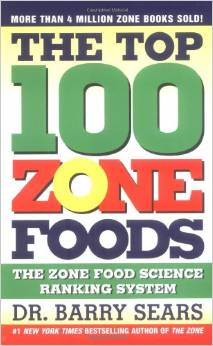
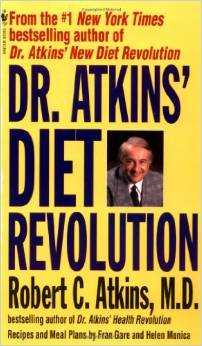
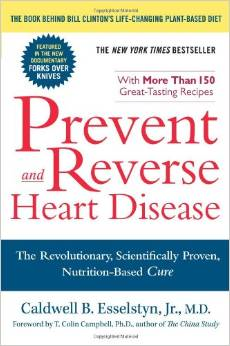
Here is a sampling of the books I have read, in no particular order, looking for the answer:

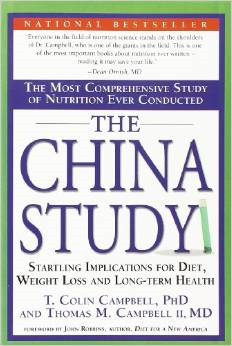
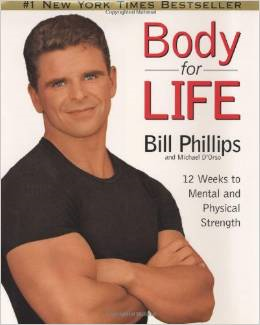
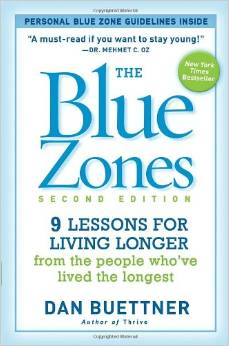
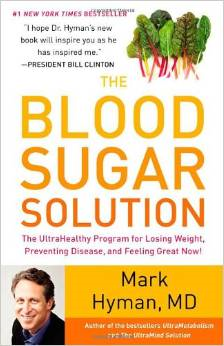
The South Beach Diet The Perfect 10 Diet The Life Plan The Top 100 Zone Foods The Disease Dillusion The China Study The Body For Life The Blue Zones The Blood Sugar Solution The Top 100 Zone Foods Dr. Atkins DietPrevent and Reverse Heart DiseaseThe Joe Dillon DiferencePower Foods

All of these books have their specific points-of-view.

Some of these advocate vegetarian or vegan food.

Some recommend high protein.

Some recommend low carbs.

Some balanced meals.

Some advocate very low amount fats.

Some recommend saturated fats. Some don’t.

Some focus on eating simple foods.

Some focus on sugar management.

Some say track (count) calories.

Some say don’t bother with calories counting.

So, what is one to do?

It is so easy to get lost in trees or the nuances of different food paradigms.

While there are so many things these books don’t agree on, there are also a lot they all do agree on.

Looking for what they do agree on, here are some basic principles I have extracted from these and other books and resources:

  1. What you eat, how much you eat and when you eat, all matter
  2. Eat clean
  3. Eat lots of vegetables and fruits
  4. Use only healthy fats and fat sources
  5. Incorporate sufficient proteins in your diet
  6. Best beverage to drink is pure water
  7. Add or subtract specific foods based on your personal needs

Over the next posts, I plan to take each of these items one at time and share my thoughts. For now, I would like to hear your feedback on this list of basic principles.

Have you seen any diet book or nutritional studies that violate any of these basic principles?

Do you think there should be other basic principles to add to this list?

Post #19 – So, where do our ideas about food, medicine, and health come from?

27 Sunday Jul 2014

Posted by purposelyliveto120 in Aging, Nutrition, Stress, wellness

≈ Leave a comment

I recently heard a July 7 ,2014 story on the National Public Radio (NPR), and it blew me away. Here is an excerpt from it:

“For the past decade or so, [Mark] Petticrew and a group of colleagues in London have been searching through millions of documents from the tobacco industry that were archived online in the late ’90s as part of a legal settlement with tobacco companies.

What they’ve discovered is that both Selye’s work and much of the work around Type A personality [by two American cardiologists — Meyer Friedman and Ray Rosenman] were profoundly influenced by cigarette manufacturers. They were interested in promoting the concept of stress because it allowed them to argue that it was stress — not cigarettes — that was to blame for heart disease and cancer.”

You remember, in one of the previous post, I talked about endocrinologist Hans Selye being the pioneer of stress research and was even the first to use the term stress in the context of health?

Here is another one that made me shake my head, an essay in the Wall Street Journal May 6, 2014, about the link between saturated fat and heart disease that included the following:

“Butter and lard had long been staples of the American pantry until Crisco, introduced in 1911, became the first vegetable-based fat to win wide acceptance in U.S. kitchens. Then came margarines made from vegetable oil and then just plain vegetable oil in bottles.

All of these got a boost from the American Heart Association—which Procter & Gamble, the maker of Crisco oil, coincidentally helped launch as a national organization. In 1948, P&G made the AHA the beneficiary of the popular “Walking Man” radio contest, which the company sponsored. The show raised $1.7 million for the group and transformed it (according to the AHA’s official history) from a small, underfunded professional society into the powerhouse that it remains today.

After the AHA advised the public to eat less saturated fat and switch to vegetable oils for a “healthy heart” in 1961, Americans changed their diets. Now these oils represent 7% to 8% of all calories in our diet, up from nearly zero in 1900, the biggest increase in consumption of any type of food over the past century.”

And, I am sure by now you well know about Crisco and partially hydrogenated oils definitely not being good for a “healthy heart.”

I can’t but wonder, if this story that “saturated fats are not bad after all” in WSJ is factual or planted (or suggested, advised, recommended, advocated, proposed – you pick the right word) by the animal food industry.

Or, did you know that what you might have learned in the elementary school in the US, may be in 2nd, 3rd or 4th grade, about food groups, e.g.,

Milk Group (Build strong bones)

Meat Group (Build strong muscles)

Vegetable Group (Help you see in the dark)

Fruit Group (Help heal cuts and bruises)

Grain Group (Give us energy)

All these associations are the gift of marketing through school education by the National Dairy Council. [Chapter 15, the “science” of industry, The China Study, by T. Colin Campbell, Ph.D.]

What about the following:

“Eggs, bacon and toast is a perfect American breakfast”

“Orange juice is not for breakfast anymore”

“Pork – the other white meat”

“Chicken in every pot”

“Cholesterol causes heart attack”

“To lower cholesterol eat turkey”

The old saying, “follow the money” to get the real story, is definitely true in these cases.

In our house, when we used to watch commercial TV with our boys, I would insist that we turn the volume off during commercials. That was a one very small attempt to minimize the impact of commercials and programmed associations.

So, how do we figure out what is best for our health and longevity?

It is certainly not easy to filter this information out from the deep seeded subconscious associations we have, the financially motivated deluge of marketing information and finally the good old biases people have, whether scientists, politicians, professionals or friends and family?

Any thoughts? How do you  figure out what is best for you?

I would love to hear and learn.

[By the way, to leave your comment, click on the link “leave a comment” at the top right hand corner of the post just below the title, simply enter your comment in the box  that will appear where it says, “Enter your comment here..”. As soon as you put your cursor there, you will see a button “Post Comment” to click and submit after you have typed your comment]

Newer posts →

Recent Posts

  • Post #69 – Resources I used to rehabilitate my knee: Part II – Knee Misalignment Issue
  • Post #68 – Resources I used to rehabilitate my knee: Part I – Diagnose and Fix Structural Issue
  • Post #67 – What is the Minimum Stack of Supplements to Take?
  • Post #66 – Optimal Health through Optimal Breathing
  • Post #65 – Fasting, the old new technology and panacea for Optimal Health – Part III

Recent Comments

purposelyliveto120's avatarpurposelyliveto120 on Post #66 – Optimal Health thro…
Michael Jansen Jr.'s avatarMichael Jansen Jr. on Post #66 – Optimal Health thro…
Michael Jansen Jr.'s avatarMichael Jansen Jr. on Post #65 – Fasting, the…
Sherri Boczar's avatarSherri Boczar on Post #64 – Fasting, the…
Sherri Boczar's avatarSherri Boczar on Post #63 – Fasting, the…

Archives

  • July 2024
  • June 2024
  • June 2022
  • January 2021
  • September 2019
  • August 2019
  • July 2019
  • September 2018
  • May 2018
  • February 2018
  • July 2017
  • September 2016
  • August 2016
  • July 2016
  • June 2016
  • May 2016
  • April 2016
  • March 2016
  • February 2016
  • January 2016
  • December 2015
  • November 2015
  • October 2015
  • September 2015
  • August 2015
  • July 2015
  • June 2015
  • May 2015
  • April 2015
  • March 2015
  • February 2015
  • January 2015
  • December 2014
  • November 2014
  • October 2014
  • September 2014
  • August 2014
  • July 2014
  • June 2014
  • May 2014
  • April 2014
  • March 2014

Categories

  • Aging
  • Autophagy
  • Bikram Yoga
  • Biomarkers for Stress
  • Breathing
  • Causes of Death
  • Causes of Death
  • Dying
  • Fasting
  • Functional Medicine
  • Ideal Body Weight
  • knee-pain
  • Lean Mass
  • Life-Span
  • Living to 120
  • meditation
  • Mental Health
  • Muscoskeletal alignment
  • Nutrition
  • Optimal Exercise
  • Optimal Health
  • Optimal Nutrition
  • Optimal Sleep
  • Percent Body Fat
  • Puposely Living
  • Quality of Life
  • Reversing Chronic Diseases
  • Stress
  • Supplements
  • TM
  • Uncategorized
  • Vigor
  • Vitality
  • wellness
  • Yoga

Meta

  • Create account
  • Log in
  • Entries feed
  • Comments feed
  • WordPress.com

Recent Posts

  • Post #69 – Resources I used to rehabilitate my knee: Part II – Knee Misalignment Issue
  • Post #68 – Resources I used to rehabilitate my knee: Part I – Diagnose and Fix Structural Issue
  • Post #67 – What is the Minimum Stack of Supplements to Take?
  • Post #66 – Optimal Health through Optimal Breathing
  • Post #65 – Fasting, the old new technology and panacea for Optimal Health – Part III

Recent Comments

purposelyliveto120's avatarpurposelyliveto120 on Post #66 – Optimal Health thro…
Michael Jansen Jr.'s avatarMichael Jansen Jr. on Post #66 – Optimal Health thro…
Michael Jansen Jr.'s avatarMichael Jansen Jr. on Post #65 – Fasting, the…
Sherri Boczar's avatarSherri Boczar on Post #64 – Fasting, the…
Sherri Boczar's avatarSherri Boczar on Post #63 – Fasting, the…

Archives

  • July 2024
  • June 2024
  • June 2022
  • January 2021
  • September 2019
  • August 2019
  • July 2019
  • September 2018
  • May 2018
  • February 2018
  • July 2017
  • September 2016
  • August 2016
  • July 2016
  • June 2016
  • May 2016
  • April 2016
  • March 2016
  • February 2016
  • January 2016
  • December 2015
  • November 2015
  • October 2015
  • September 2015
  • August 2015
  • July 2015
  • June 2015
  • May 2015
  • April 2015
  • March 2015
  • February 2015
  • January 2015
  • December 2014
  • November 2014
  • October 2014
  • September 2014
  • August 2014
  • July 2014
  • June 2014
  • May 2014
  • April 2014
  • March 2014

Categories

  • Aging
  • Autophagy
  • Bikram Yoga
  • Biomarkers for Stress
  • Breathing
  • Causes of Death
  • Causes of Death
  • Dying
  • Fasting
  • Functional Medicine
  • Ideal Body Weight
  • knee-pain
  • Lean Mass
  • Life-Span
  • Living to 120
  • meditation
  • Mental Health
  • Muscoskeletal alignment
  • Nutrition
  • Optimal Exercise
  • Optimal Health
  • Optimal Nutrition
  • Optimal Sleep
  • Percent Body Fat
  • Puposely Living
  • Quality of Life
  • Reversing Chronic Diseases
  • Stress
  • Supplements
  • TM
  • Uncategorized
  • Vigor
  • Vitality
  • wellness
  • Yoga

Meta

  • Create account
  • Log in
  • Entries feed
  • Comments feed
  • WordPress.com

Blog at WordPress.com.

  • Subscribe Subscribed
    • Purposely Live to120
    • Join 68 other subscribers
    • Already have a WordPress.com account? Log in now.
    • Purposely Live to120
    • Subscribe Subscribed
    • Sign up
    • Log in
    • Report this content
    • View site in Reader
    • Manage subscriptions
    • Collapse this bar
 

Loading Comments...