• About
  • Content Organized by Life-Style Choices

Purposely Live to120

~ Living to the full potential life-span with full vigor

Category Archives: wellness

Post #26 – Eating for Optimal Health Part V – Eat Only Healthy Fats and Fat Sources

27 Monday Oct 2014

Posted by purposelyliveto120 in Living to 120, Nutrition, Optimal Health, Optimal Nutrition, wellness

≈ 1 Comment

Tags

Cholesterol, Lifestyle

In blog post of 9/29/2014: So, what should you eat for optimal health?, I listed the seven basic principles I have extracted from the many diet books and resources I have studied. These principles are:

  1. What you eat, how much you eat and when you eat, all matter
  2. Eat clean
  3. Eat lots of vegetables and fruits
  4. Use only healthy fats and fat sources
  5. Incorporate sufficient proteins in your diet
  6. Best beverage to drink is pure water
  7. Add or subtract specific foods based on your personal needs

In the last two posts, we discussed the first three of these principles. Today, let’s focus on the fourth principle: Eat only healthy fats and fat sources. And, as usual without any fluff stuff, let’s get to it.

How much and what types of fats one should for optimal health is definitely a very controversial topic. Let’s see if I can put this controversy in proper perspective and reach some workable conclusions in this post.

To make sure that we can intelligently talk about this topics without having to get a graduate degree in biochemistry, first some basic terminology. Lipids, triglycerides, fatty acids, essential fatty acids, fats, saturated fats, monounsaturated fats and polyunsaturated fats, trans fats, and oils are some common terms we need to understand to really talk about fats. Here are a layman’s definitions of these terms.

Lipids are group of molecules that are used by the body for storing energy, signaling, and acting as structural components of cell membranes. Lipids include waxes, triglycerides, and fat-soluble vitamins.

Triglycerides are lipids derived from glycerol and three fatty acids.

Fatty acids are made up of long chain of carbon hydrogen atoms and are important source of fuel for the body when metabolized. Based on the bond structures, fatty acids can be Monounsaturated, Polyunsaturated, Trans or Saturated.

If Polyunsaturated, based on where the double bonds are located on the chain, fatty acids can be omega-3, omega-6, omega-7 or omenga-9.

Essential fatty acids are those fatty acids that body cannot make. These are of two types: alpha-linolenic acid (an Omega-3 fatty acid) and linoleic acid (an omega-6 fatty acid)

Fats are a wide group of compounds whose basis is a fatty acid. Fats are called Monounsaturated, Polyunsaturated, Trans fats, or Saturated fats based on the structure of their corresponding fatty acid.

Oils are fats that are liquids at normal room temperature.   As you can see below, most oils and fats contain all three types of fats: saturated, monounsaturated, and polyunsaturated.

Oils and fat content

What most researchers seem to agree on?

  1. Trans Fats are bad – So, Crisco (or Dalda in India) is out. It is definitely bad for your health. Most people have already learned that and taken it out of their kitchens. But it is still quite prevalent for frying at home, baking pies and cookies and in processed food. In the US, since FDA has taken Trans Fats off of the Generally Regarded As Safe (GRAS) list, it is starting to disappear from processed and restaurant foods.
  2. Adding Essential Fats to your diet is good: While most people get sufficient Omega-6 in their diets they do not get enough Omega-3. So, adding alpha-linolenic acid (ALA), eicosapentaenoic acid (EPA), and docosahexaenoic acid (DHA) is good. Good sources of Omega-3 are fish, flax seeds and oil, safflor oil and Hemp. USDA recommends that at least 10% of the fat budget be Omega-3 fats.
  3. Small amount of saturated fats in diet is good: Saturated fats are needed for cell walls, hormone balance, cellular signaling and increasing HDL (the so called good cholesterol).

What is controversial?

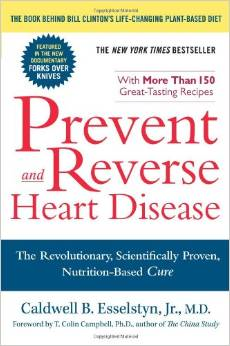
  1. What percent of calories should come from fats: There are researchers who have demonstrated that by reducing the fat intake to 10%, you can dramatically change the lipid profile in the body, cholesterol, triglycerides issues can be totally eliminated, while significantly improving the health of cardio-vascular system (For example, see Prevent and Reverse Heart Disease by Caldewell Esselystyn, Jr. MD., The Perfect 10 diet by Michael Aziz, MD). However, to get to these levels for fat intakes, it means adopting vegan or almost-vegan lifestyle and that of course leads to the controversy.
  2. Whether to totally eliminate saturated fats from the diet: It is well-known that too much saturated fat leads to poor cardio-vascular health. However, very small amount of saturated fats are needed and found beneficial for cellular health, hormone balance and cellular signaling and increasing HDL. Controversy therefore comes when people arguing all or nothing approach to saturated fats.
  3. Fats vs. Carbs: When government and media started touting benefits of low fat diets starting in 1960’s and 70’s, people in the US started to replace their high (saturated) fat diets with low-fat high-sugar diet. If you look at any package in the grocery store, if it says, low fat, it usually means high carbs or sugars, or vice versa. This led to obesity and other issues. So, all this means sugars are bad, which means fats must be good, right?
  4. Trans Fats vs. saturated fats: Unfortunately, this controversy was created on purpose. Proctor and Gamble deployed a sales strategy to displace lards as saturated fats by Crisco vegetable shortening. This plot thickens, since P&G was the original funding source for American Heart Association. With 100 years of marketing behind it, there is got to be sufficient confusion prevalent.

Bottom line: So, what is one to do? Here is what I have decided to do, in pursuit of optimal health, based on the best current information I have:

  1. Keep fat intake to less than 15% of daily calories. So, for a 2000 calorie diet, 300 calories or 33 grams from fat in a day.
  2. Take four grams of fish oil and 2 grams of flax seed oil every day. One capsule with each meal or snack.
  3. Limit saturated fats to under  5% of daily calories. Most sources of fats, as we saw in the table above contain some saturate fats, so I don’t really need to add saturated fats, even if we do all the cooking with olive oil. Occasional egg yoke or dab of butter is okay. Since I am a vegetarian,  limiting saturated fats to under 5%is not a big issue. But if I were eating meat, I will have to eat very lean cuts of meat to be able to stay within this constraint.
  4. No Trans Fats.
  5. Manage all macronutrients, fats, carbs and proteins to make sure they all are in the optimal range.

What do you think of this approach?

Do you feel that this simplifies the confusion about fats and good/bad fats?

Do you see a hole in this approach? What would you do differently?

Post #24 – Eating for Optimal Health Part III – Eat Clean

12 Sunday Oct 2014

Posted by purposelyliveto120 in Nutrition, Optimal Health, wellness

≈ Leave a comment

Tags

Allergies

In blog post of 9/29/2014: So, what should you eat for optimal health?, I listed the seven basic principles I have extracted from the many diet books and resources I have studied. These principles are:

  1. What you eat, how much you eat and when you eat, all matter
  2. Eat clean
  3. Eat lots of vegetables and fruits
  4. Use only healthy fats and fat sources
  5. Incorporate sufficient proteins in your diet
  6. Best beverage to drink is pure water
  7. Add or subtract specific foods based on your personal needs

Last week we discussed the first of these principles, what you eat, how much you eat, and when you eat, all matter. Today, let’s focus on the second principle: Eat Clean. And, as usual without any fluff stuff, let’s get to it.

Dr. Mark Hyman likes to say, “If you eat crap, you feel like crap”. You may have heard a variation of this same theme.

Here is how to recognize foods to which the term “crap” may apply:

  • Junk foods – Foods that have excessive and/or unhealthy fats and/or excessive sugars/salt
  • Foods with empty calories: – that do not contain any nutrients other than sugar for calories. For example sodas and candy.
  • Comfort Foods: Foods with high sugar, salt and/or fat content
  • Processed Foods: Foods made in a plant (or factory)
  • Food with questionable additives – Ingredients whose names you have difficulty pronouncing
  • Foods with artificial flavorings
  • Foods with “non-sugars” – that use artificial sweeteners such as saccharin or aspartame
  • Foods that use High Fructose Corn Syrup as sweetener
  • Foods that use partially hydrogenated oils
  • Meat or Poultry grown with hormones and antibiotics and/or in unhealthy conditions
  • Tainted Sea Food – with heavy metals such as mercury or other impurities
  • Fruits and Vegetables laced with pesticides
  • Unclean water or foods prepared with unclean water

That’s pretty much it. So, if you eliminate these types of foods from your diet, you are eating clean.

There are a lot of research papers, books and literature on why eating such foods is unhealthy or not optimal for your health. Some of the reasons are quite nuanced, but a lot of the reasons are quite stark and plain:

  • In addition to being unhealthy, foods with excess sugars, salts and fats tend to be addicting.
  • We all know by now how hydrogenated oils lead to issues with coronary health.
  • You don’t have to go to medical school to figure out why foods with foreign hormones, chemicals, pesticides, or heavy metals are bad for our health.
  • Ingesting high fructose corn syrup can damage the liver and can create issues such as allergies.
  • Artificial sweeteners are known to interfere with expression of genes.

Two areas, related to this topic of eating clean, seem to generate a lot of conversation: GMO vs. No-GMO and Organic vs. Non-organic.

Some people won’t go near GMO or genetically modified foods, but others don’t mind. Same debate goes on between organic and non-organic. Safer option to me seems to be eat organic and non-GMO, whenever possible. Although, organic is really not required for the foods that are grown with minimal or no-pesticides, have thick peels or you peel them before eating.

There are plenty of lists of foods on the internet for which eating organics reduce pesticides significantly. For example, this Dirty Dozen List recommends, you buy the following foods organically grown because of high pesticide contents and because they either have very thin skis or are often eaten without peeling:

  • Apples
  • Celery
  • Cherry Tomatoes
  • Cucumbers
  • Grapes
  • Hot Peppers
  • Nectarines
  • Peaches
  • Potatoes
  • Strawberries
  • Spinach
  • Sweet Bell Peppers
  • Kale
  • Collard Greens
  • Zucchini
  • Lettuce
  • Blueberries
  • Fatty Meats
  • Milk
  • Coffee
  • Wine
  • Chocolate

On the other hand, the following are quite clean and are not necessary to buy organic:

  • Onions
  • Sweet Corn
  • Pineapple
  • Avocado
  • Asparagus
  • Frozen Sweet peas
  • Mango
  • Papayas
  • Eggplant
  • Cantaloupe (domestic)
  • Kiwi
  • Cabbage
  • Watermelon
  • Sweet Potatoes
  • Grapefruit
  • Mushrooms

What do you think -does this make sense?

Do you feel there are other ways to detect clean vs. “crap”?

Are there other types of foods that you will put in organic vs. non-organic categories?

Post #23 – Eating for Optimal Health Part II – What you eat, how much you eat and when you eat, all matter.

06 Monday Oct 2014

Posted by purposelyliveto120 in Ideal Body Weight, Lean Mass, Living to 120, Nutrition, Optimal Health, Percent Body Fat, wellness

≈ Leave a comment

Tags

Aging, Lifestyle

Eating for Optimal Health Part II – What you eat, how much you eat and when you eat, all matter.

In last week’s blog post: So, what should you eat for optimal health? – Part I, I listed the seven basic principles I have extracted from the many diet books and resources I have studied. These principles are:

  1. What you eat, how much you eat and when you eat, all matter
  2. Eat clean
  3. Eat lots of vegetables and fruits
  4. Use only healthy fats and fat sources
  5. Incorporate sufficient proteins in your diet
  6. Best beverage to drink is pure water
  7. Add or subtract specific foods based on your personal needs

Today, let’s focus on the very first principle: What you eat, how much you eat and when you eat, all matter. And, without any fluff, let’s get to it.

What you eat: Our physical bodies need:

  • Oxygen
  • Water
  • Macro nutrients: carbs, proteins and fats
  • Micro nutrients: vitamins and minerals
  • Enzymes
  • Bacteria
  • Certain molecules

For optimal health, what we eat needs to provide all these items in optimal quantities. If any of these are taken in insufficient quantities, suboptimal health will result.

How much you eat: One aspect of how much to eat is based on how much energy we need every day. The other aspect is to eat so as to receive optimal quantities for our bodies’ needs a) through g) above.

The first aspect about energy, in-turn depends upon two factors. How many Kcals (or Calories) do we need for the basic metabolic activities (beating heart, circulation of blood, breathing, maintaining body temperature etc.). And, for other physical activities which can depend upon our lifestyle, taking elevators vs. taking stairs, number of steps walked in a day, exercise or no exercise, driving to work or biking to work, doing the work manually or letting machines do the work, etc.

And, there is yet another factor that dictates how much to eat question, i.e., how efficiently is your body able to convert food to energy. Basic metabolic cycle, called Krebs Cycle or the Citric Acid Cycle involves myriads of elements to convert carbs, protein and water into energy.

When to eat: While there are many theories as to when to eat, there is one major principle that is well understood and is critical to optimal health: Sugar Management. Body converts carbohydrates into glucose (sugars) before they can be converted to energy using the Krebs cycle. Rate at which carbs convert to sugars depends on the glycemic index of the specific food. And, how much sugar is generated, also called glycemic load, in this process is based on glycemic index and the quantity of food.

Body either uses up all the glucose it generates or it stores away what it cannot use in the form of body fat. For optimal health, one must eat just enough, so that all of it can be converted into stored energy rather than stored fat. This means eating meals more often, if necessary, to not generate excess that will have to be stored away as fat.

Bottom line and My Personal Plan: Given all these factors, you can easily imagine why there is much room for controversy about what to eat, how much to eat and when to eat.

When one expert says, “Just figure out  how many calories you need and then simply eat that many calories.”

Next expert might say, “Not true, because you still need all of the elements 1 through 7 that body needs. That is why, 2500 calories from sodas is not the same as 2500 calories from fruits and vegetables.”

Yet, third expert may argue that if you are missing just a few key ingredients, your energy cycle may be all messed up and nothing else will matter.

So, what is one to do? The best answer, I have synthesized from all those book and resources I mentioned in part I, is as follows. I am here using my personal example to illustrate. These days, my weight is 161 (plus minus 2 lbs.)

  1. Decide how many calories you need to consume in a day, based on your build and life style (usually 2300 calories to 2800 calories):

In my case, I decided about 2500 calories meet my daily need.

  1. If you are not at optimal percent body fat, reduce the calorie in-take by 20%

So in my case, since I am still working on losing body fat, I budgeted 2500 x 80% = 2000 calories

  1. 15% should come from fat

For me, 2000 x 15% = 300 calories. 300/9 = 33 grams of fat

  1. Budget 1 gram per pound of body weight for protein.

For me: 160 grams of proteins. 160gms x 4 cals/ gm = 640 calories

  1. What remains is budget for carbs. Thus, Calories from carbs = Total Calorie budget – fat cals – protein calories. Divide by 4 for number of grams of carbs.

So my daily intake budgets are:

  • Total 2000 calories
  • 300 cals from fat, i.e., 33 gms
  • 640 cals from protein, i.e., 160 gms
  • 1060 cals from carbs, i.e., 265 gms.
  1. Use fruits and vegetables as the basis for carbs that will not only meet carb requirements but also most of the micro nutrients. It is really easy to blow carbs budget with breads and pasta, and most of those also have very high glycemic load.
  2. Use your choice of protein sources for the budgeted amount of protein requirement. Again, be careful in selecting protein sources, since it is very easy to blow the fat budget with poor choice of protein sources.
  3. Break up intake into at least six meals and mix proteins with carbs for each meal to keep sugar level throughout out the day and also prevent spikes after each meal.

For one day, I did a complete journal of what I ate and also using resources on the Internet figured calories for carbs, proteins and fats. This was a particular intense day during my 21-day Muscle Mania challenge. I don’t always do strength training workout with my trainer and Bikram yoga the same day.

Below here is the result. Remember, I am a vegetarian and I have been using Whey Protein as my major source of protein.

You can Click on the picture to enlarge it, if it is not readable.

Meal Planner and Journal for Ashok

What do you think of this approach?

Do you feel that this simplifies the mumbo jumbo of what to eat, how much to eat and when to eat for optimal health?

Do you see a hole in this approach? What would you do differently?

Post #22 – So, what should you eat for optimal health?

29 Monday Sep 2014

Posted by purposelyliveto120 in Aging, Nutrition, Optimal Health, Puposely Living, Vitality, wellness

≈ 2 Comments

So, what should you eat for optimal health? – Part I

That is the million dollar question. Isn’t it? This is such a big and controversial topic that so far I had dared not touch it. There is so much information out there on this topic. It is mind boggling.

Let us start from a simple premise.

Let’s assume for a moment that you can get over all the excuses like: I don’t like the taste of it, or I am a vegetarian, or I cannot live without meat, or but that’s the way I was raised, or but I travel too much, or, I don’t have time to eat healthy, etc., etc., etc.

If the only objective was optimal health and you could follow whatever diet or nutritional plan was optimal, what should you eat?

Well, that is the question I have been asking and answer I have been searching for quite a while now.

Here is a sampling of the books I have read, in no particular order, looking for the answer:

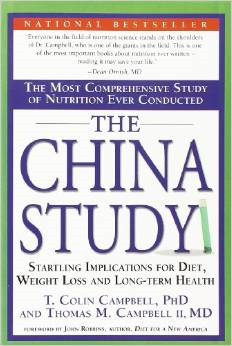
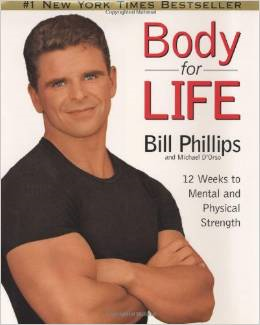
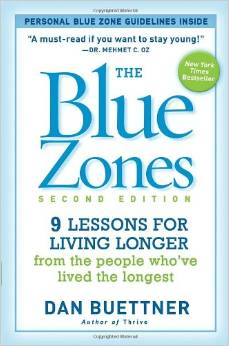
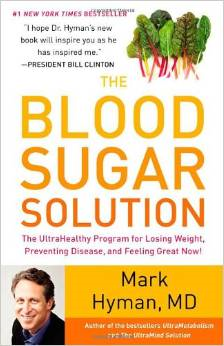
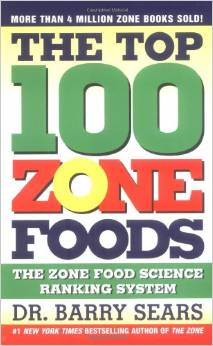
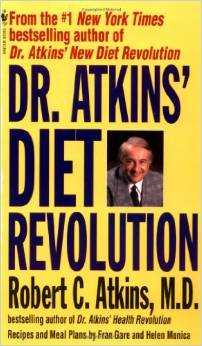
The South Beach Diet The Perfect 10 Diet The Life Plan The Top 100 Zone Foods The Disease Dillusion The China Study The Body For Life The Blue Zones The Blood Sugar Solution The Top 100 Zone Foods Dr. Atkins DietPrevent and Reverse Heart DiseaseThe Joe Dillon DiferencePower Foods

All of these books have their specific points-of-view.

Some of these advocate vegetarian or vegan food.

Some recommend high protein.

Some recommend low carbs.

Some balanced meals.

Some advocate very low amount fats.

Some recommend saturated fats. Some don’t.

Some focus on eating simple foods.

Some focus on sugar management.

Some say track (count) calories.

Some say don’t bother with calories counting.

So, what is one to do?

It is so easy to get lost in trees or the nuances of different food paradigms.

While there are so many things these books don’t agree on, there are also a lot they all do agree on.

Looking for what they do agree on, here are some basic principles I have extracted from these and other books and resources:

  1. What you eat, how much you eat and when you eat, all matter
  2. Eat clean
  3. Eat lots of vegetables and fruits
  4. Use only healthy fats and fat sources
  5. Incorporate sufficient proteins in your diet
  6. Best beverage to drink is pure water
  7. Add or subtract specific foods based on your personal needs

Over the next posts, I plan to take each of these items one at time and share my thoughts. For now, I would like to hear your feedback on this list of basic principles.

Have you seen any diet book or nutritional studies that violate any of these basic principles?

Do you think there should be other basic principles to add to this list?

Post #20 – So, how much muscle can you gain in a short period and why you may want to?

10 Sunday Aug 2014

Posted by purposelyliveto120 in Aging, Bikram Yoga, Biomarkers for Stress, Ideal Body Weight, Lean Mass, Life-Span, Living to 120, Optimal Health, Percent Body Fat, Vitality, wellness, Yoga

≈ Leave a comment

In most health literature, one thing I find repeated over and over again is that muscle or lean body mass is a very important factor for health and longevity.

When I heard from Joe Dillon about 15 months ago a concrete technique to lose body fat and gain muscle mass, I got inspired. Although, I had generally been keeping track of my weight, up until then I had never really thought of tracking or targeting body fat and lean mass directly.

More I studied this topic, the more it all made sense. Weight and Body Mass Index (BMI) are just proxy for tracking body fat and lean mass, which are what really count. It is the body fat that is harmful and it is the lean mass that is helpful – and both in so many different ways. And, at times BMI and body fat can be very poor approximation of body fat and lean mass.

If in the process of losing weight, you lose muscle mass rather than fat, that is not a good thing at all. In fact, that can be very harmful to your health. Mark Hyman, MD talks about a term call skinny fat to describe someone who looks quite skinning, has good weight, but the weight is very disproportionately fat mass.

William Evans, Ph.D. and Irwin Rosenberg, MD in their seminal work, Biomarkers, The 10 Determinants of Aging You Can Control,” coined the term Sarcopenia, to describe a “disease” when someone lacks adequate lean body mass.

Jim Karas, in his book, The Business Plan for the Body”, calls lean mass the net worth. When he talks to business people, who understand financials, he explains weight, muscle and fat this way: weight is your total assets, fat is total debt and lean muscle mass is your equity or net worth. And, if you do nothing, starting with age 30, you lose muscle mass, about 7 lbs. per decade for men and women, and accelerating to one pound per year after menopause for women. So, if you do nothing to counteract, by the age of 60, you will have lost 21 lbs. of muscle mass and replaced with 21 plus your weight gained, since the age of 30, in body fat. Is that 31 lbs. or 41 lbs. or more of additional body fat? Yikes!

You get the idea.

Through all this studying, I found a new way to articulate that object of the game (or obsession) of weight loss, i.e., to simply target and measure percent body fat. And, Joe Dillon provided ideal targets. He feels that for optimal health men should have no more than 15% body fat, while woman should have no more than 22%. Further, he says, that the world class male athletes have body fat percent in the range of 6 to 12% and female athletes in the range of 12% to 18%.

So, instead of looking up on the BMI tables to estimate what ideal body weight should be, a precise method is:

Ideal weight = Body Fat Weight/0.15 for 15% body fat target.

Where, Body Fat Weight = Current Weight * Current % body fat

Current % body fat is measureable by taking seven different measurements with calipers and them plugging into calculator.

With all this knowledge in hand, I started my journey. On May 17, 2013, started with these measurements:

Table 4

Notice that in May 2013, at 23.9% body fat, my ideal weight was150.0 lbs. And, as it generally happens if I were to lose 17.5 lbs to get to 150.0, it will prTable 1obably not all be body fat. So, as more weight I lost lower my ideal body weight would need to be. No wonder this is a sucker’s game (or obsession)!

My goal was to lose body fat, while at the same time gain lean mass!

I changed my diet per Joe Dillon’s recommendations. Basically, took breads and sweets totally out of my meals and all processed foods, added more raw fruits and vegetables, decreased quantity of what I would eat and added about 150 grams of proteins through Whey concentrate and isolate shakes. I kept to my then most recent routine of one fitness/resistance training workout and two to three Bikram Yoga sessions a week.

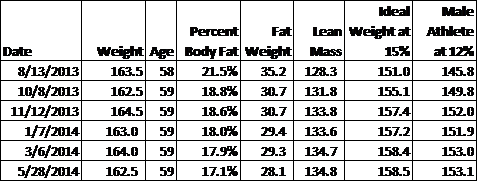
I progressed along pretty well as you can see in the table below, especially through the end of the year.

Table 5

Every month I was losing about a pound of fat and gaining a pound of lean mass. That seemed very encouraging. After a few months of watching that trend, I even raised my target. I started to ask, “Wouldn’t it be cool to get six-pack at sixty?” I have never had six-pack abs before. Why not? May be 12% body fat would do it.

And, then starting beginning of year, the progress sort of plateaued. In April, I added to my weekly workout routine Joe Dillon’s power walks with weights about three days a week. And, I started to make a very gentle progress again.

About then, I did some blood work and found out that my testosterone was low. Aha, may be that was the reason my progress had stalled! I theorized. Low-T and elevated estradiol wreaks havoc on lean mass for muscle. “Man boobs” are signs of low-T and elevated estradiol in men. Health literature is quite sure about this, e.g., check out, Testosterone for Life: Recharge Your Vitality, Sex Drive, Muscle Mass, and Overall Health by Abraham Morgentaler, MD.

So, I started to work on that through herbal supplements, which is still work-in-progress and another story for another day. Joe Dillon recommends getting that test up-front, which I did not do, so I did not really have any baseline numbers to compare.

About a month ago, I saw an exercise program by Shawn Phillips, who is a world class body sculptor. He called this program, Muscle Mania – a program made up of intense workouts, one muscle a day, every single day for 21 days. His promise was add 4 pound of muscle mass in 21 days.

I talked to our trainer Saleem and my wife Kimberly. Both were encouraging and we went for it. Starting July 16th, for the next 21 mornings, under Saleem’s coaching Kimberly and I worked out. (Actually on day 20, I did not feel well, so we skipped a day and finished the program in 22 days). For 21 days, we bombed one muscle group every morning: chest, biceps/triceps, legs, back, shoulders in whatever order and with whatever exercises the program recommended. Some days, I felt totally exhausted, some days very energized. But we pushed through it and finished the program as intended.

My right shoulder stiffened up a little during one of the bench press exercises. So, I started using the foam roller for rolling. Found it to be incredible beneficial. From then on, I incorporated about 10 minute of rolling as part of the warm up routine. Jeffry S. Life, MD Ph.D. in his book, “The Life Plan: How Any Man Can Achieve Lasting Health, Great Sex, and a Stronger, Leaner Body” recommends rolling for warm-ups and flexibility by working on the fascia.

So, here is the result.

Table 6

As of August 9, if I am measuring, it correctly (Kimberly did the measuring wherever I can’t reach), I have achieved 15.1% body fat! And, as the table shows my weight of 161.0 is the same as ideal weight of 160.9 at 15% body fat.

I did not really do the measurements before and after the 21-day program. But no doubt, I made most of this progress between May and August during the 21-day program. During this period, I lost 4 lbs. of body fat and gained 2 lbs. lean mass.

And, I can see hints of my six-pack! It seems like 12% body fat will surely make my abs visible.

So, there you have it – the story of my chase for 15% body fat and in turn for my ideal weight.

I definitely, feel more energized. This has also brought my cholesterol in line. I quit taking Lipitor last year in May, the same time I started this journey. And, the most recent blood work showed total cholesterol of 145, LDL of 88, HDL 43 and Triglycerides of 69. That is the best it has been even with Lipitor!

To continue the progress, for the near future, Kimberly and I are planning on two days of strength/resistance training, two days of some aerobics including power walks and two days of Bikram Yoga for flexibility, balance and cleansing the internal organs.

What are your thoughts or comments on this whole endeavor?

If any of this helps you or inspires you to take on some health challenge, I would love to hear about it and/or answer any questions you may have.

Post #19 – So, where do our ideas about food, medicine, and health come from?

27 Sunday Jul 2014

Posted by purposelyliveto120 in Aging, Nutrition, Stress, wellness

≈ Leave a comment

I recently heard a July 7 ,2014 story on the National Public Radio (NPR), and it blew me away. Here is an excerpt from it:

“For the past decade or so, [Mark] Petticrew and a group of colleagues in London have been searching through millions of documents from the tobacco industry that were archived online in the late ’90s as part of a legal settlement with tobacco companies.

What they’ve discovered is that both Selye’s work and much of the work around Type A personality [by two American cardiologists — Meyer Friedman and Ray Rosenman] were profoundly influenced by cigarette manufacturers. They were interested in promoting the concept of stress because it allowed them to argue that it was stress — not cigarettes — that was to blame for heart disease and cancer.”

You remember, in one of the previous post, I talked about endocrinologist Hans Selye being the pioneer of stress research and was even the first to use the term stress in the context of health?

Here is another one that made me shake my head, an essay in the Wall Street Journal May 6, 2014, about the link between saturated fat and heart disease that included the following:

“Butter and lard had long been staples of the American pantry until Crisco, introduced in 1911, became the first vegetable-based fat to win wide acceptance in U.S. kitchens. Then came margarines made from vegetable oil and then just plain vegetable oil in bottles.

All of these got a boost from the American Heart Association—which Procter & Gamble, the maker of Crisco oil, coincidentally helped launch as a national organization. In 1948, P&G made the AHA the beneficiary of the popular “Walking Man” radio contest, which the company sponsored. The show raised $1.7 million for the group and transformed it (according to the AHA’s official history) from a small, underfunded professional society into the powerhouse that it remains today.

After the AHA advised the public to eat less saturated fat and switch to vegetable oils for a “healthy heart” in 1961, Americans changed their diets. Now these oils represent 7% to 8% of all calories in our diet, up from nearly zero in 1900, the biggest increase in consumption of any type of food over the past century.”

And, I am sure by now you well know about Crisco and partially hydrogenated oils definitely not being good for a “healthy heart.”

I can’t but wonder, if this story that “saturated fats are not bad after all” in WSJ is factual or planted (or suggested, advised, recommended, advocated, proposed – you pick the right word) by the animal food industry.

Or, did you know that what you might have learned in the elementary school in the US, may be in 2nd, 3rd or 4th grade, about food groups, e.g.,

Milk Group (Build strong bones)

Meat Group (Build strong muscles)

Vegetable Group (Help you see in the dark)

Fruit Group (Help heal cuts and bruises)

Grain Group (Give us energy)

All these associations are the gift of marketing through school education by the National Dairy Council. [Chapter 15, the “science” of industry, The China Study, by T. Colin Campbell, Ph.D.]

What about the following:

“Eggs, bacon and toast is a perfect American breakfast”

“Orange juice is not for breakfast anymore”

“Pork – the other white meat”

“Chicken in every pot”

“Cholesterol causes heart attack”

“To lower cholesterol eat turkey”

The old saying, “follow the money” to get the real story, is definitely true in these cases.

In our house, when we used to watch commercial TV with our boys, I would insist that we turn the volume off during commercials. That was a one very small attempt to minimize the impact of commercials and programmed associations.

So, how do we figure out what is best for our health and longevity?

It is certainly not easy to filter this information out from the deep seeded subconscious associations we have, the financially motivated deluge of marketing information and finally the good old biases people have, whether scientists, politicians, professionals or friends and family?

Any thoughts? How do you  figure out what is best for you?

I would love to hear and learn.

[By the way, to leave your comment, click on the link “leave a comment” at the top right hand corner of the post just below the title, simply enter your comment in the box  that will appear where it says, “Enter your comment here..”. As soon as you put your cursor there, you will see a button “Post Comment” to click and submit after you have typed your comment]

Post #18 – How to measure wellness or vitality?

21 Monday Jul 2014

Posted by purposelyliveto120 in Optimal Health, Uncategorized, Vigor, Vitality, wellness

≈ Leave a comment

“So, how are you feeling?” my trainer always asks me before we start any work out session.

“How are you?” We ask each other all the time.

Checking-in at Vistage, a CEO group that I belong to, we always rate our health and personal state from scale of 1 to 10 and then describe to the group what is happening in our lives for us to rate it that way

“So, how does one define health or wellness” is a question that frequently comes up when I get into such conversation with people.

Is it lack of aches or pains, becoming free of medicines, being not flagged for any biomarkers in the results of our blood work by being within the range, not huffing and puffing while going up the stairs at the office or home? Or, is it being in some higher state of vitality?

Some people are satisfied with answers like, “Okay”, “Pretty Good”, “Great”, or “Stressed”.

But that is not very satisfying, if you are like me and believe in the old adage, “You get what you measure”.

My personal goal is to physically and emotionally live in a state of 9 or 10 at least 90% of the time, 10 being the most desirable state.

So, is there a quick and easy way to quantify such subjective measures?

I will talk about two different methods.

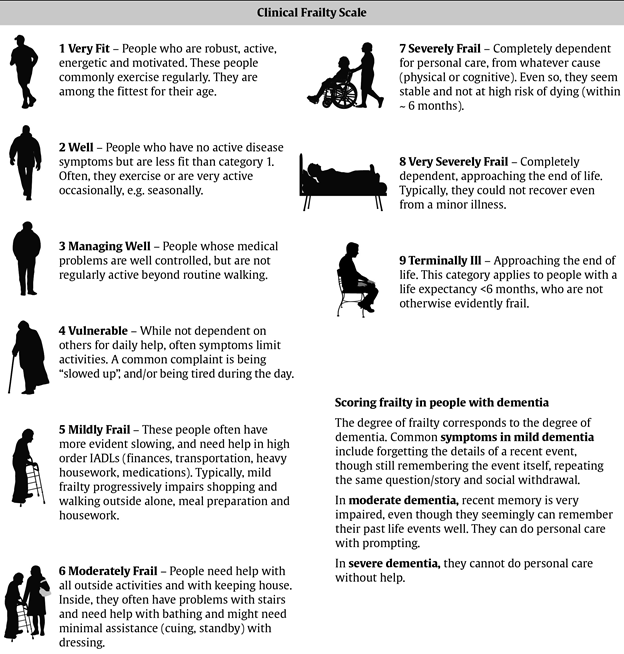
The first is an observational evaluation based on a 9-Point Clinical Frailty Scale developed by the Canadian Study of Health and Aging. This scale, shown below, is actually used in geriatric evaluations and research in Canada. (In this scale 1 is most healthy and 9 is least healthy). I find the descriptions of various levels quite telling and fairly precise.

Clinical Frailty Scale

The second one is my favorite. I came across this method many years ago, when I was evaluating the impact of some super green algae based supplement. Along with the supplement, the company sent me a journal to daily record my physical and emotional state. And, then to see for myself, if the supplement did any good.

Here I have changed some of the labels slightly and recalibrated the scale to go from 10 to 1.

Health Scale

So, for me personally, if I want to check in with myself and see where I am, this is the scale I like to use.

If I am not at 9 or above, then I can quickly analyze the root cause, the solutions and then take action to get back to 9 or above.

This is also very useful to assess the impact of any lifestyle changes, exercise, yoga, dietary changes, supplements, etc., to track physical and emotional health over a certain period.

What about you, do you think it is a useful exercise to measure or calibrate where you are physically and emotionally and track it?

How do you measure where you are physically and emotionally?

I would love to hear from you.

Newer posts →

Recent Posts

  • Post #69 – Resources I used to rehabilitate my knee: Part II – Knee Misalignment Issue
  • Post #68 – Resources I used to rehabilitate my knee: Part I – Diagnose and Fix Structural Issue
  • Post #67 – What is the Minimum Stack of Supplements to Take?
  • Post #66 – Optimal Health through Optimal Breathing
  • Post #65 – Fasting, the old new technology and panacea for Optimal Health – Part III

Recent Comments

purposelyliveto120's avatarpurposelyliveto120 on Post #66 – Optimal Health thro…
Michael Jansen Jr.'s avatarMichael Jansen Jr. on Post #66 – Optimal Health thro…
Michael Jansen Jr.'s avatarMichael Jansen Jr. on Post #65 – Fasting, the…
Sherri Boczar's avatarSherri Boczar on Post #64 – Fasting, the…
Sherri Boczar's avatarSherri Boczar on Post #63 – Fasting, the…

Archives

  • July 2024
  • June 2024
  • June 2022
  • January 2021
  • September 2019
  • August 2019
  • July 2019
  • September 2018
  • May 2018
  • February 2018
  • July 2017
  • September 2016
  • August 2016
  • July 2016
  • June 2016
  • May 2016
  • April 2016
  • March 2016
  • February 2016
  • January 2016
  • December 2015
  • November 2015
  • October 2015
  • September 2015
  • August 2015
  • July 2015
  • June 2015
  • May 2015
  • April 2015
  • March 2015
  • February 2015
  • January 2015
  • December 2014
  • November 2014
  • October 2014
  • September 2014
  • August 2014
  • July 2014
  • June 2014
  • May 2014
  • April 2014
  • March 2014

Categories

  • Aging
  • Autophagy
  • Bikram Yoga
  • Biomarkers for Stress
  • Breathing
  • Causes of Death
  • Causes of Death
  • Dying
  • Fasting
  • Functional Medicine
  • Ideal Body Weight
  • knee-pain
  • Lean Mass
  • Life-Span
  • Living to 120
  • meditation
  • Mental Health
  • Muscoskeletal alignment
  • Nutrition
  • Optimal Exercise
  • Optimal Health
  • Optimal Nutrition
  • Optimal Sleep
  • Percent Body Fat
  • Puposely Living
  • Quality of Life
  • Reversing Chronic Diseases
  • Stress
  • Supplements
  • TM
  • Uncategorized
  • Vigor
  • Vitality
  • wellness
  • Yoga

Meta

  • Create account
  • Log in
  • Entries feed
  • Comments feed
  • WordPress.com

Recent Posts

  • Post #69 – Resources I used to rehabilitate my knee: Part II – Knee Misalignment Issue
  • Post #68 – Resources I used to rehabilitate my knee: Part I – Diagnose and Fix Structural Issue
  • Post #67 – What is the Minimum Stack of Supplements to Take?
  • Post #66 – Optimal Health through Optimal Breathing
  • Post #65 – Fasting, the old new technology and panacea for Optimal Health – Part III

Recent Comments

purposelyliveto120's avatarpurposelyliveto120 on Post #66 – Optimal Health thro…
Michael Jansen Jr.'s avatarMichael Jansen Jr. on Post #66 – Optimal Health thro…
Michael Jansen Jr.'s avatarMichael Jansen Jr. on Post #65 – Fasting, the…
Sherri Boczar's avatarSherri Boczar on Post #64 – Fasting, the…
Sherri Boczar's avatarSherri Boczar on Post #63 – Fasting, the…

Archives

  • July 2024
  • June 2024
  • June 2022
  • January 2021
  • September 2019
  • August 2019
  • July 2019
  • September 2018
  • May 2018
  • February 2018
  • July 2017
  • September 2016
  • August 2016
  • July 2016
  • June 2016
  • May 2016
  • April 2016
  • March 2016
  • February 2016
  • January 2016
  • December 2015
  • November 2015
  • October 2015
  • September 2015
  • August 2015
  • July 2015
  • June 2015
  • May 2015
  • April 2015
  • March 2015
  • February 2015
  • January 2015
  • December 2014
  • November 2014
  • October 2014
  • September 2014
  • August 2014
  • July 2014
  • June 2014
  • May 2014
  • April 2014
  • March 2014

Categories

  • Aging
  • Autophagy
  • Bikram Yoga
  • Biomarkers for Stress
  • Breathing
  • Causes of Death
  • Causes of Death
  • Dying
  • Fasting
  • Functional Medicine
  • Ideal Body Weight
  • knee-pain
  • Lean Mass
  • Life-Span
  • Living to 120
  • meditation
  • Mental Health
  • Muscoskeletal alignment
  • Nutrition
  • Optimal Exercise
  • Optimal Health
  • Optimal Nutrition
  • Optimal Sleep
  • Percent Body Fat
  • Puposely Living
  • Quality of Life
  • Reversing Chronic Diseases
  • Stress
  • Supplements
  • TM
  • Uncategorized
  • Vigor
  • Vitality
  • wellness
  • Yoga

Meta

  • Create account
  • Log in
  • Entries feed
  • Comments feed
  • WordPress.com

Blog at WordPress.com.

  • Subscribe Subscribed
    • Purposely Live to120
    • Join 68 other subscribers
    • Already have a WordPress.com account? Log in now.
    • Purposely Live to120
    • Subscribe Subscribed
    • Sign up
    • Log in
    • Report this content
    • View site in Reader
    • Manage subscriptions
    • Collapse this bar
 

Loading Comments...