Post #38 – What are some basic lab tests for monitoring optimal health?

Tags

, ,

When I turned 40, I decided to visit my doctor and asked him to give me a 40,000 mile checkup. So, the doctor ordered some blood work, an EKG, and scheduled a full physical. On my scheduled physical, he asked me some questions about my lifestyle and if I had any issues. He checked my vitals, listened to my heart and lungs, and did a rectal exam to verify I did not have enlarged prostates. He reviewed my lab results and EKG. And, told me “everything was normal”. So I assumed I was in perfect health.

I repeated that same process every few years.

Few years ago, I started questioning, whether that process of physicals was sufficient for living an Optimal Health. As I started to study this subject, I learned that was not the case.

First of all, and as we discussed in my last blog post, that “everything is normal” does not necessarily mean I am living an Optimal Health. If my cholesterol or fasting glucose numbers are within the “reference range”, it does not mean that they are the best that may be desired for an optimal health.

Next, I started questioning whether the tests that my primary physician was conducting were adequate for optimal health. And, the answer came out be: no, it was not. For living an optimal health, my objective is to detect any issues at the earliest possible moment in time, which the physicals alone were not accomplishing.

Sooner I can detect an issue, I believe easier it is for me to do something about it. As my flight instructor drilled in my head when I was learning flying, “It is easier to make small corrections sooner than big corrections later”. I believe the same is definitely true for health as well.

So, what other tests should I undergo to detect any issues early? As I studied this topic some more, here is what I learned are the basic numbers I should know.

I am sure everyone is already well aware of measuring Total Cholesterol, HDL, LDL and Triglycerides, which most physicians very faithfully measure these days.

Hemogloblin A1c

Excess blood sugar is a huge issue for health. It has so many different implications to health.

Fasting Glucose level often measured by primary physicians is not adequate for early detection of blood sugar and insulin issues. Commonly called A1c, measured as percent of A1c or glycated blood cells is a very important to know to really understand if one is diabetic or pre-diabetic.

Last year, when for the first time I measured my A1c, I found that it was elevated and was in the pre-diabetic range. I had no data to compare with since none of my labs during physicals in the last twenty years had measured A1c. My physicians did not feel the need to measure it since my fasting glucose has always been and still is under 90 which is within the reference range and is considered “normal”.

Having tested it multiple times during the last 15 months, I noticed it is going up and I have been further investigating its root cause and aggressively treating it with further changes in my lifestyle.

Vitamin D, 25-Hydroxy

Although, called a Vitamin, it is really a hormone. When I leaned that every single cell in the body has receptors for Vitamin D, I really finally understood Vitamin D’s significance. It is implicated in so many health issues and is responsible for turning on/off as many as 500 different genes. Although, many labs don’t consider your Vitamin D deficient until below the reference range minimum of 30, many studies support a value of 50 to 60 as the optimal range.

TSH

Thyroids, either underactive or over-active, can be an issue and cause of a wide variety of symptoms. The thyroid-stimulating hormone (TSH) test is often the test of choice for evaluating thyroid function and/or symptoms of a thyroid disorder, including hyperthyroidism or hypothyroidism. TSH is good screening test and if noted abnormal doctors will want to further investigate by examining free T3 and T4.

Homocysteine

Homocysteine is an amino acid and breakdown product of protein metabolism that, when present in high concentrations, has been linked to an increased risk of heart attacks, strokes and Alzhiemer’s disease. High Homocysteine level also indicate deficiency in B12 and folic acid. There are no immediate symptoms associated with high levels of Homocysteine. So, it is useful to know your levels and make necessary adjustments in lifestyle if needed to prevent future issues.

C-Reactive Protein (CRP)

CRP is a protein made by the liver. The level of CRP rises when there is inflammation throughout the body. So, the CRP test is a general test to check for inflammation in the body. It is not a specific test. That means it can reveal that you have inflammation somewhere in your body, but it cannot pinpoint the exact location. Many consider a high CRP level to be a risk factor for heart disease. However, it is not known whether CRP is merely a sign of cardiovascular disease or if it actually plays a role in causing heart problems. Some researchers assert that Homocysteine and CRP are more important to monitor for cardiovascular health than cholesterol.

Testosterone

Both men and women have testosterone. In men, testosterone plays a key role in the development of male reproductive tissues such as the testis and prostate as well as promoting secondary sexual characteristics such as increased muscle, bone mass, and the growth of body hair. In addition, testosterone is essential for health and well-being as well as the prevention of osteoporosis. Low Testosterone (Low-T) can cause issues such as losing muscle mass, pre-maturely developing “man boobs”, losing “get-up and go”, erectile dysfunction, and low libido or sexual desire.

There is controversy over what the “normal” range should be as testosterone tends to decline as men age. Often, receiving testosterone through hormone replacement therapy can restore “get-up and go” and sexual desires and performance and other youthful traits. It is not only important to measure Total Testosterone, but also even more importantly Free Testosterone, which is the testosterone available for use by the body.

DHEA-Sulphate

DHEA-sulfate is a weak male hormone (androgen) produced by the adrenal gland in both men and women. DHEA is a pre-cursor of both Testosterone and Estradiol. A shortage of DHEA can lead to shortage of testosterone in men or estradiol in women.

Estradiol

Estradiol is a human sex hormone and the primary female sex hormone. It is named for and is important in the regulation of the estrous and menstrual female reproductive cycles. Estradiol is essential for the development and maintenance of female reproductive tissues but it also has important effects in many other tissues including bone. While estrogen levels in men are lower compared to women, estrogens have essential functions in men as well.

 So, how do you get these tests done?

First stop to get these tests should be your primary physician. Mark Hyman, M.D. has a very helpful report on his website:  How to work with your doctor to get what you need?  That report may be useful to read and bring along.

Your doctor may be reluctant to order these test even after you express your desire to have these test done. That was the case with my primary physician. So, I went ahead and found a place that will run these tests in the U.S.: Life Extension Foundation. You can order a variety of tests from them, but their Male Panel and Female Panel include all of the tests mentioned above. Additionally, these tests include metabolic panel with lipids (i.e., Cholesterol), Complete Blood Count and PSA (for men) and Progesterone (for women)

From Life Extension Foundation, you can order these tests online or over the phone. Your will then go to a local lab for blood draw and then receive results on hardcopy, email or online. They even have folks you can call to discuss the results.

Having studied these basic tests and their implication to optimal health, I even asked our twenty three year old twin boys to do their blood work for full male panel. They don’t have any health issues, but I thought it was important for them to have this information as their baselines when they are in top health and establish what is “normal” for them.

So, when they are 60 year old or if an issue arises they have baselines to compare against. They will not have to wonder like was the case for me, “How do my current testosterone levels or A1c compare to what I had when I was twenty three and in top shape?”

So, there you have it – the basic information you may want to know for optimal health.

What are your thoughts?

Is there something else basic that is important to measure to live optimal health?

I would love to hear from you!
Post #37 – When the doctor says “Everything is normal”, what does it mean?

Tags

, ,

The following paragraph is from a handout I saw in the office of Ben Gonzales, M.D.:

Everything is Normal” … said the doctor to you. You went to your doctor because you haven’t been feeling yourself in a while. Something is not quite right. You feel a bit “off” but can’t quite put your finger on it. You may be gaining weight despite working out and eating right, your energy levels have been dropping, sex drive is decreasing or you simply are losing your ability to focus. Yes, you have the usual and may be unusual stresses at home, job, financially, relationships perhaps. Your sleep patterns are changing and you do not know why. The doctor did an exam, got some basic labs and tells you, “Everything is normal” But you don’t feel normal. What is “normal” when it comes to labs? Why is it that results vary in “normal ranges” from lab to lab?

Or, maybe it is the opposite scenario, as described below an excerpt from Labs Online website:

Your test was out of the normal range,” your doctor says to you, handing you a sheet of paper with a set of test results, numbers on a page. Your heart starts to race in fear that you are really sick. But what does this statement mean, “Out of the normal range”? Is it cause for concern?

Doctors may use the words “normal” informally, but labs these days more often than not use the word reference range.

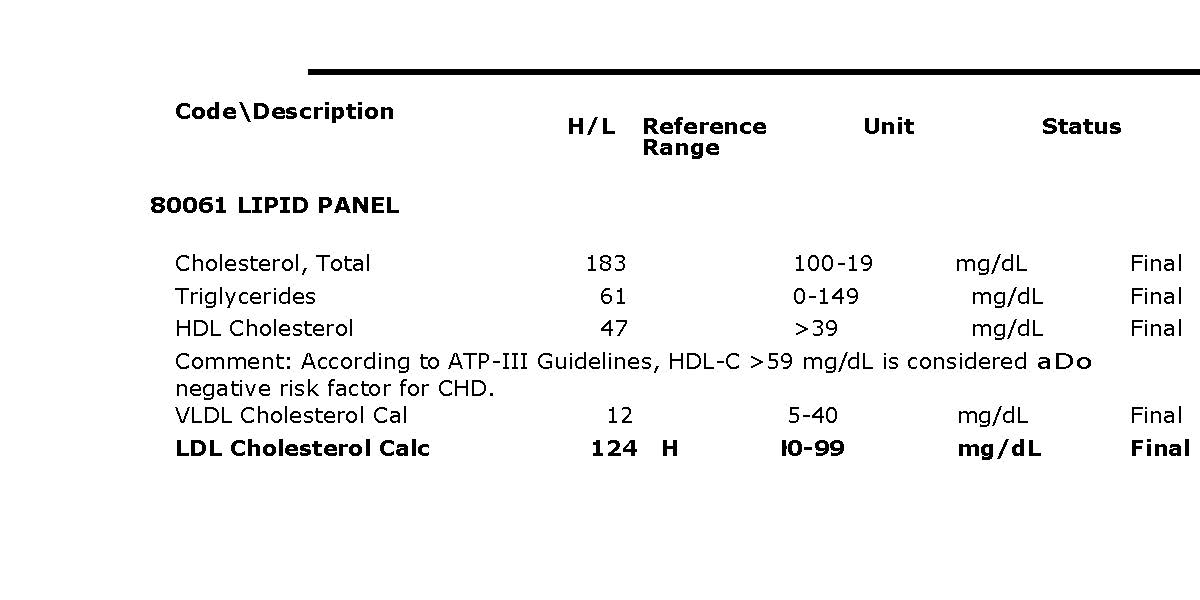
For example, blood work for Cholesterol may look like this:

(If the figure is legible, just click on it)

Figure

In this above example, Total Cholesterol, Triglycerides, HDL, VLDL are all within their corresponding Reference Ranges. While LDL Cholesterol, which is a calculated value from other measurements is outside the range, marked here with bold font and also with letter H (for High) in the next to the reference range.

First of all, where do these Normal or Reference Ranges come from and what does it mean to be within the range or outside the range – doctors and you may refer to as Normal or Not-Normal after a quick review of the lab results?

For some tests, guidance may come from National Institute of Health (NIH) or some expert panel of the corresponding physician’s association. For example, in the case of Cholesterol, the reference range is taken from the NIH Heart, Lung, and Blood Institute publication called Third Report of the Expert Panel on Detection, Evaluation and Treatment of High Blood Cholesterol in Adults, or Adult Test Panel III or ATP III. NIH has developed this publication by organizing expert panels of medical professionals and researcher to review all the literature and then develop recommendations.

For some other tests, ranges are derived by collecting data for a large enough group of people and then performing some statistical analysis to derive what is “normal” for them

The first step in determining a given reference range is usually to define the population to which the reference range will apply, for example, healthy females between 20 and 30 years old. A large enough number of individuals from this category are tested for a specific laboratory test. The results are then averaged and a range (plus or minus 2 standard deviations of the average) of normal values is established.

And that becomes the reference range, based on which, you may be told “Everything is normal” or the opposite of it.

So, given this background, what should you be watching out for or questioning in this process? Here are some questions to ask, that may lead you to dig further into your labs:

  1. Does the lab data correspond to how I feel?
  2. Do I belong to the category from which the reference range was derived?
  3. What is the optimal range, not just normal range?

There is an intriguing story of a woman who during her pregnancy felt awful but her doctor kept telling her that everything was normal and she even had a miscarriage. She eventually figured out that she was suffering from Hypothyroid and found the right doctor to work with, thus totally transforming her life. She became a crusader in educating women on this thyroid issue and launched HypothyroidMom website.

Then there is even a bigger question: Are the lab tests that are being used for screening issues the right tests?

Dr. Gonzalez in his flier concludes:

Many basic labs are left out in an initial general physical workup. Understanding what labs to obtain in evaluating your physiologic function is not a basic skill seen in many primary care clinics. Again, simply because most clinics are looking for disease results in your labs, not optimal results as they relate to your long term good health. This is an issue in our current health care system. Finding a provider who understands optimal ranges in your labs and how nutrition fits into managing your health can be challenging. Seek that provider.

Because everything may not be “normal”.”

In my next post I will share some more information about what are some overlooked labs that your primary physician may be reluctant to order but are these days considered vital for managing optimal health.

So, what are your experience on this subject.

I would love to hear and learn.

Post #36 – What is most important for Optimal Health – Body, Mind or Spirit?

Tags

,

Let me first define each of these three terms. Starting point could be our handy-dandy Merriam Webster dictionary.

Body, it says, is “A person’s or animal’s whole physical self.” So, that is straightforward – Arms, legs, heart, head, arteries, liver, hands, toes, and so on, make up the Body.

Mind, again according to the dictionary, is “the part of a person that thinks, reasons, feels, and remembers.

Spirit per the dictionary is the force within a person that is believed to give the body life, energy, and power.

So, which one is most important for optimal health?

Or, in other words, if I were to focus on living the longest possible and the healthiest possible which one should I focus on first?

Writing this blog post, at this point I got stuck. I did not know where to go with this topic.   I took a long break and when I returned to my writing I found website for The Bravewell Collaborative, which has been doing pioneering work in Integrative Medicine as a catalyst of change in healthcare.

When I read the article The Connection Between Mind and Body on their site, I felt it perfectly captured my sentiments and thoughts on this topic, albeit from a much more authoritative source. So, here I share this article verbatim. Bold highlights are mine. There is, of course, a lot of additional good stuff on the The Bravewell Collaborative website.

Modern scientific research supports this age-old tenet of medical wisdom [of mind-body connection]. It began in the 1920s, when Harvard scientist Walter Cannon, MD, identified the fight-or-flight response through which the body secretes hormones called catecholamines, such as epinephrine and nonepinephrine. When they enter the blood stream, these hormones produce changes in the body—i.e. a quickened heart or increased breathing rate—that put the person in a better physical state to escape or confront danger.

In the following decade, Hungarian-born scientist Hans Selye, MD, pioneered the field of stress research by describing how the wear-and-tear of constant stress could affect us biologically. Since then, scores of scientific breakthroughs have illuminated the mind-body connection in health.

Experimental psychologist Neal Miller, PhD, discovered that we can be trained to control certain physical responses, such as blood pressure, that were previously considered to be involuntary. This discovery gave birth to biofeedback, which has now been found to be effective in the treatment of anxiety, attention deficit disorder, headache, hypertension, and urinary incontinence.

Harvard cardiologist Herbert Benson, MD, identified the flip side of the stress response, which he called the “relaxation response.” Benson demonstrated that meditation, yoga, and other relaxation techniques can bring about physiological changes including a lower heart rate, lower breathing rate, and decreased muscle tension along with positive changes in brain waves. Mind-body techniques that elicit this relaxation response have been successful in treating many stress-related disorders.

Research by psychologist Robert Ader, PhD, at the University of Rochester provided a link between the brain, behavior and immune function, and founded the new field of psychoneuroimmunology, which researches ways to increase immune function through the use of the mind.

Based on a Buddhist meditation practice, Jon Kabat-Zinn, PhD, at the University of Massachusetts, developed Mindfulness Based Stress Reduction (MBSR), a mediation technique that has successfully reduced physical and psychological symptoms in many medical conditions, including pain syndromes.

“When we are on automatic pilot, trying to get someplace else all the time without being attentive to where we already are, we can leave a wake of disaster behind us in terms of our own health and wellbeing, because we’re not listening to the body. We’re not paying attention to its messages; we’re not even in our bodies much of the time,” explains Kabat-Zinn. “Mindfulness—paying attention on purpose in the present moment nonjudgmentally—immediately restores us to our wholeness, to that right inward measure that’s at the root of both meditation and medicine.”

Guided imagery, which utilizes the power of imagination to heal, has been shown to reduce anxiety and pain in people with a wide range of medical conditions, including asthma, back pain, and headache, and to help patients better tolerate medical procedures and treatments. “Imagery utilizes the natural language of the unconscious mind to help a person connect with the deeper resources available to them at cognitive, affective and somatic levels,” explains Martin L. Rossman, MD.

Innovative research by Dean Ornish, MD, and his colleagues found that a program integrating mind-body techniques such as yoga, meditation, stress management, and group support with diet and exercise reversed coronary artery disease. “What we are finding is that comprehensive lifestyle changes may ‘turn on’ the beneficial parts of the genome and ‘turn off’ the more harmful parts,” says Dr. Ornish.

Today, these breakthroughs in our understanding of the mind-body connection have translated into effective therapies that support a patient’s journey through illnesses and trauma. Virtually every major medical center now has a stress management or mind-body clinic, and practices such as meditation, yoga, and group support are woven into the medical treatment of heart disease, cancer, and other serious illnesses.

James Gordon, Director and Founder, Center for Mind-Body Medicine, has conducted mind-body skills trainings for patients and health care practitioners around the world. Gordon has said, “Mind-body medicine requires that we ground information about the science of mind-body approaches in practical, personal experience; that we appreciate the centrality of meditation to these practices; and that we understand—experientially as well as scientifically—that the health of our minds and the health of our bodies are inextricably connected to the transformation of the spirit.”

So, looks like to me that Body, Mind and Spirit are all EQUALLY important to Optimal Health. These three are inter-connected. And, we need to focus on all three of these in an integrative fashion for Optimal Health.

What do you think?

What is your experience on this topic?

I would love to hear about your thoughts.

Post #35 – What is Optimal Health? Some observations from my ski vacation.

Tags

,

Two weeks ago, I took a vacation to go skiing with my son Justin in Colorado. We skied (actually I ski, Justin snow boards) in Breckenridge, Keystone and Vail. On the first day snow conditions were okay for Colorado. But during the next two days, it snowed and with the fresh snow the conditions were great.

Every once in a while, I would stop in the middle of my skiing to check up on my body, admire the mountains and the vistas all around me, to express my gratitude, or to be simply mindful of  the phenomenal opportunity I had to be there.

I was very happy with my body. It was providing me all the energy, endurance, strength, balance, quickness and flexibility that I needed to be able to enjoy the slopes. And, on top of that I was able to push myself just to improve my skills by attempting some challenging expert trails.

I did take a few spills too. With the flexibility and quick reflexes that my body afforded me, the spills were uneventful.

Throughout our time on the slopes, Justin kept saying, “Come on dad, lets do what we came here to do.”  And, that led me to the following thought.

Justin Snowboarding

Justin Snowboarding

Me Skiing

Me Skiing

In the previous posts on this blog, I have talked about how Bio Markers are used to define Optimal Health. Reflecting upon the ski experience, I thought a good “clinical” way of defining Optimal Health beyond the Bio Markers was simply “having the ability to do what one wants to do”.

On a typical day, it could simply be the energy you need from when you wake up in the morning until the end of the day. Or, as I often like to say, “Optimal Health is to run out of the day before you run out of energy”.

But through the ski vacation, it is clear that what we need is more than the energy. Isn’t it?

So, for Optimal Health, in addition to Energy, we also need:

Endurance – to be able to go the distance, when we need it. Not all days are equal.

Strength – to conduct whatever our work or play requires

Flexibility – some say that flexibility is the real power or strength

Balance – the stories abound over the last two weeks of slips and slides on the ice and snow

Quick Reflexes – we require quick reaction times to adapt to the circumstance

So, Optimal Health for me is not only all bodily systems working well without any fuss or muss, but also having sufficient Energy, Strength, Endurance, Flexibility, Balance and Quick Reflexes that matches your lifestyle.

How do you define Optimal Health?

I would love to hear from you.

Please feel free to leave your comments or questions to this post, so others can participate, share and learn.

Post #34 – But are you happy?

Tags

,

During the early years of our marriage (we are celebrating our 30th anniversary this month!), I used to bristle anytime my wife Kimberly wanted to know if I was happy. Or, if whatever-happened-to-be-the-subject-of-conversation would make me happy?

My typical response used to be, “Why is it important to be happy? What does it mean to be happy any ways?”

I would relate to her the story, probably umpteenth time, how I learned in my Pre-Engineering College days from my Physics teacher, Professor Sood, what became my golden rule, “Always be content, but never be satisfied.”

I have spent much time pondering over that advice and have been living my life with that as my motto.

After a while she changed her tactics and gave up trying to make me “happy”. So she would instead ask me, “So are you content?” “Does whatever-happened-to-be-the-subject-of-conversation make you content?

In response, initially I used to launch into my pontification that she was missing the point. But over time I learned to hold my tongue. She was, after all, making the effort with my best interest at heart.

I always did and still do appreciate the fact that it is important for her to see me happy. As much as it is important for me to always be content yet not satisfied.

Later on, from Tony Robbins’ training, I learned that happiness is just a state of mind that can be triggered by a combination of three things: how we use our physiology, what we focus on, and the biochemistry of our bodies.

If I stand or sit like I am happy, look up, put a grin on my face, breathe deeply as I breathe when I am happy, I do feel happy.

If I focus on thoughts that make me happy, ask questions such as ‘what am I most grateful for?’, ‘who loves me and who do I love?’, and ‘what am I most proud of?’ I do feel happy. If I meditate, set aside thoughts of anxiety I feel happy.

If my blood sugar is even, I am well hydrated, my tummy is sated, and I am well rested again, I feel happy.

This simple yet profound lesson from Tony Robbins further reinforced for me that achieving happiness or being content is well within the reach of everyone at all times.

Pursuit of Happiness, seemingly a lofty goal, enshrined in the Constitution of the United States of America, which could be called not just a fundamental right but more like a duty or obligation to oneself is so easily achievable.

As I have learned from Tony Robbins and in turn, taught to some of my friends and family, with just a little bit of practice we can all change our state of mind from any state of mind to Being Happy or Content in really a heartbeat.

So then, what does Pursuit of Happiness really mean?

May be what it really means is the Right to be Dissatisfied.

Like my Physics professor told me forty five years ago, “Always be content but never be satisfied.” If someone takes away my right to be dissatisfied, all my personal progress will probably come to a screeching halt.

What, after all, drives me to be more? In what area would I like to be more or better? What will cause me to evolve, if I feel that I am perfect as I am and everything in my circumstance sis perfect as it is?

Extrapolating this thought to a group of people, if we take the right to be dissatisfied away from a society, then progress of the society will come to a screeching halt. What new frontiers will a society choose to tackle next, if it is already satisfied on all fronts?

Bottom line:

The way I see it, contentment is our birthright, our fundamental duty or obligation to ourselves, and the most natural state of our being.

On the other hand, being dissatisfied or pursuit of happiness, the fundamental right our constitution endows us with is our raison d’être, the very reason and justification of our existence.

What is your view of happiness?

How do you define and achieve happiness?

I would love to hear. Please feel free to leave your comments or questions to this post, so others can participate, share and learn.

Post #33 – What can you do to maintain optimal health of your brain? Or, How my sons got me playing video games?

Tags

, , ,

In most of my past blogs, I have talked about maintaining optimal physical health – staying physically fit, keeping all chronic diseases such as diabetes, arthritis, high blood pressure, cardiovascular issues and such at bay. Also, I have talked about developing, building and maintaining lean mass, strength, balance and flexibility.

But, what about the brain? How to keep brain in top shape as we age, while keeping Alzheimer disease and dementia far away from ourselves? What is in our control that we can do?

After all, living to 120 (or to whatever your target is), without full cognitive faculties won’t be much fun.

Researching this topic, I found that National Institute of Health (NIH), National Institute of Aging, has a very good chapter “The Changing Brain in Healthy Aging” in their publication “Alzheimer’s Disease: Unraveling the Mystery”. The following is excerpt from that chapter.

As a person gets older, changes occur in all parts of the body, including the brain:

  • Certain parts of the brain shrink, especially, the prefrontal cortex (an area at the front of the frontal lobe) and the hippocampus. Both areas are important to learning, memory, planning, and other complex mental activities.
  • ­Changes in neurons and neurotransmitters affect communication between neurons. In certain brain regions, communication between neurons can be reduced because white matter (myelin covered axons) is degraded or lost.
  • ­Changes in the brain’s blood vessels occur. Blood flow can be reduced because arteries narrow and less growth of new capillaries occurs.
  • ­In some people, structures called plaques and tangles develop outside of and inside neurons, respectively, although in much smaller amounts than in Alzheimer Disease
  • ­Damage by free radicals increases – free radicals are a kind of molecule that reacts easily with other molecules­
  • Inflammation increases  – inflammation is the complex process that occurs when the body responds to an injury, disease, or abnormal situation.

What effects does aging have on mental function in healthy older people?

Some people may notice a modest decline in their ability to learn new things and retrieve information, such as remembering names. ­They may perform worse on complex tasks of attention, learning, and memory than would a younger person.

However, if given enough time to perform the task, the scores of healthy people in their 70s and 80s are often similar to those of young adults. In fact, as they age, adults often improve in other cognitive areas, such as vocabulary and other forms of verbal knowledge.

It also appears that additional brain regions can be activated in older adults during cognitive tasks, such as taking a memory test. Researchers do not fully understand why this happens, but one idea is that the brain engages mechanisms to compensate for difficulties that certain regions may be having.

For example, the brain may recruit alternate brain networks in order to perform a task. Th­ese findings have led many scientists to believe that major declines in mental abilities are not inevitable as people age. Growing evidence of the adaptive (what scientists call “plastic”) capabilities of the older brain provide hope that people may be able to do things to sustain good brain function as they age. A variety of interacting factors, such as lifestyle, overall health, environment, and genetics also may play a role.

Another question that scientists are asking is why some people remain cognitively healthy as they get older while others develop cognitive impairment or dementia. Th­e concept of “cognitive reserve” may provide some insights.

Cognitive reserve refers to the brain’s ability to operate effectively even when some function is disrupted. It also refers to the amount of damage that the brain can sustain before changes in cognition are evident. People vary in the cognitive reserve they have, and this variability may be because of differences in genetics, education, occupation, lifestyle, leisure activities, or other life experiences.

Th­ese factors could provide a certain amount of tolerance and ability to adapt to change and damage that occurs during aging. At some point, depending on a person’s cognitive reserve and unique mix of genetics, environment, and life experiences, the balance may tip in favor of a disease process that will ultimately lead to dementia.

For another person, with a different reserve and a different mix of genetics, environment, and life experiences, the balance may result in no apparent decline in cognitive function with age.

Scientists are increasingly interested in the influence of all these factors on brain health, and studies are revealing some clues about actions people can take that may help preserve healthy brain aging. Fortunately, these actions also benefit a person’s overall health. Th­ey include:

  1. ­Controlling risk factors for chronic disease, such as heart disease and diabetes (for example, keeping blood cholesterol and blood pressure at healthy levels and maintaining a healthy weight) ­
  2. Enjoying regular exercise and physical activity ­
  3. Eating a healthy diet that includes plenty of vegetables and fruits
  4. ­Engaging in intellectually stimulating activities, and
  5. Maintaining close social ties with family, friends, and community

So, actions 1, 2 and 3 suggested by NIH NIA are the same as for keeping physical body fit and in good order. That is a good news!

But there are also additional actions 4 and 5 one can take, that are good to keep brain fit and in good order.

Piano Lessons at 60:

To increase my intellectually stimulating activities, as I was turning 60, I decided to start taking piano lessons. I have been very left brain focused on my intellectual pursuits – STEM or Science Technology, Engineering and Math education. So, I figured, it is high time I did something to develop my underused right brain. And, there is a lot of evidence in research of the benefits of learning music on the brain.

For the last six months, I have been finding piano lessons very pleasurable and at the same time very intellectually and physically demanding. One half-hour lesson a week and daily practice of half hour to an hour, is what it takes for me learn and get comfortable with a piano piece my teacher introduces in the lesson. Initially it was just one piece from the “techniques book”, for the last few weeks, there is an additional piece from a popular “songs book”. All this piano playing got be doing something good for my brain, since week after week, it seems that I am learning with my brain and in my muscles new stuff.

How my sons got me playing video games:

Until now, I have completely resisted playing video games.

For Christmas, our twin sons, Daniel and Justin, gave us a present of family membership to Lumosity. Lumosity exploits research to-date in neuroplasticity. Research has found that certain types of activities may impact the brain more than others. It’s believed that as an activity is repeated, the brain tends to fall back on the same set of existing neural pathways. To continue changing, the brain must be exposed to novel, adaptive experiences that challenge it to work in new ways.

Drawing on this idea, Lumosity is designed to give each person a set of exercises that challenge their cognitive abilities.

Lumosity “games” are based on a combination of common neuropsychological and cognitive tasks, many of which have been used in research for decades, and new tasks designed by an in-house science team. Working with experienced game designers, Lumosity neuroscientists have transformed these tasks into over 40 challenging, adaptive games.

Lumosity’s game-based training program is designed to expose your brain to gradually increasing levels of challenges, adapting game difficulty to your individual ability level. As your scores increase, you may encounter new or more difficult games. Modeled from the concept of a physical personal trainer, Lumosity pushes you to operate at the limits of your abilities and stay challenged.

They also report measures of your performance, so you can see how you are improving in speed, memory, attention, flexibility and problem solving and how you compare with others in your age bracket. A metric called LPI is a consolidated metric of these five factors. Also, you can use a test called Baseline Test to see how the scores translate to other situations you don’t play in the games.

I have been playing these games for two weeks now. It is definitely fascinating, how various skills of speed, memory, attention, flexibility and problem solving improving. With this rate of progress, who knows, I may get good enough to play some video games against Justin and Daniel!

What are your thoughts on this subject of keeping brain fit and in optimal shape?

What strategies or techniques do you use to keep you brain fit?

Please leave a comment in the blog; I would love to hear from you.

Post #32 – What is the optimal time to take your supplements?

Tags

In response to the last blog post about supplements, a friend asked me this question, “What is the optimal time to take supplements?”

And, I realized that I had developed a personal routine for taking my supplements based on what my functional medicine specialist doctor had suggested and directions from the various supplement manufacturers. However, I had not really done my own digging to find the definitive answer to this question of when is the best time for different supplements.

And, since I am taking my supplements every single day, it was high time I did so.

So, here is what I found. There are several considerations in deciding the optimal time to take your supplement:

  1. With food or on empty stomach: In general, most of the multivitamins manufacturers recommend taking those with food. There are three main reasons cited for this. Taking multivitamins with food slows the absorption rate and makes the micronutrients available over longer period of time. Micronutrients are supposed to work in conjunction with macronutrients (carbs, fat ad proteins). And, finally, taking them with food makes vitamins that are fat soluble (A, D, E and K) be better absorbed, assuming the meal will have some fat content.

Exceptions to this rule are certain multivitamins or supplements that are enteric coated, so they do not dissolve in the stomach. It is recommended that these enteric coated multivitamins or supplements are taken on empty stomach. The multivitamins ones I take manufactured by Xtend-life happen to be indeed enteric coated.

  1. If the daily dosage is lots of pills – spread them out over multiple doses. For example, the Xtend-life multivitamin that I take comprises 7 pill is a good candidate of splitting into two doses. I take 4 in the afternoon and three at night.
  2. Supplements that relax the body are best taken at bed times – For example, Magnesium relaxes the muscle and help with sleep, so it is best taken at bed time. Same goes for Serotonin, which promotes sleep.
  3. Omega 3 with meals: Omega-3 supplements can be part of the fat in-take with meals and also snacks, of course, depending upon how many pills of Omega-3 you are taking. With 4 pills of Omega 3/QH and 2 pills of Flaxseed oil, I usually have at least one pill to take with every meal or snack.
  4. Probiotics are best taken in the morning – In general probiotics can be taken at any time, but the best times seem to be when the pH of the stomach is least acidic. Less acidity allows more of the bacteria to survive on their way to the intestines where they are needed. In general, in the mornings, stomach tends to be least acidic.
  5. Take them at the same time every day – Taking these at the same time every day, just like daily meals, the nutrients become available throughout the daily 24 hour daily cycle.
  6. If taking any medications, check with your doctor for any possible drug supplement interactions – This can be very important, for example, if you are taking a blood thinner, such as Coumadin, taking vitamin K might be counterproductive or may have to be accounted for to figure out proper dosage.
  7. If you miss an optimal supplement time, it is better to take the supplement at a different time the same day than to skip it – You will get at least some benefit, and there is a much better chance that the next day you will be back on schedule. Skipping always makes the skipping the following day more likely.

Based on these considerations, the following looks like an optimal schedule for my supplement regime:

Approximate Time of Day Type of Meal or Empty Stomach Supplements
8:30am Breakfast or Breakfast Shake Omega 3/QH, D3, Glucosamin/Chondoitin, Calcium Citrate, Red Rice Yeast, Super MiraForte, Probiotics,   B-Complex, L-Methylfolate
12:00pm Lunch Omega 3/QH
2pm No Meal 4 pills multivitamins, 2 pills Male Rejuvinator
3pm Snack (Almonds) Flaxseed Oil
5:30pm Shake Omega 3/QH
8pm Dinner Omega 3/QH, D3, Glucosamin/Chondoitin, Calcium Citrate, Red Rice Yeast, Super MiraForte,Vitamin B-12, Chelated Molybdenum, Alpha Lipoic Acid, CoQ10, NAC, Milk Thistle
10:30pm Bed Time

(No meal)

4 pills multivitamins, 2 pill Male Rejuvinator, Magnesium, Flaxseed Oil

What do you think? Do you have any information different from this?

When do you take your supplements?

I would love to hear.


Post #31 – What supplements to take for Optimal Health?

Tags

, , , , ,

On June 8, 2014, I wrote a blog post #15, “Is taking multivitamin and supplements helpful, harmless or harmful?” There I described my thinking on this subject and what I was taking at that time as supplements. Back then I was taking supplement in 29 pills. These days, it is up to 42 pills! So, to anyone watching, it must feel a little more than crazy.

Over the holidays, when family and friends saw me take all those supplement pills, I kept getting these questions:

“What are all these pills you are taking?”

Do you need all these supplements?

Is it even safe to take all these on a daily basis?

Finally, I pulled out my bag of supplements and gave them the full tour. I particularly wanted to hear my niece’s opinion, who is a cardiologist, to understand if I was doing anything wrong.

So, I thought this was a good topic to revisit.

Here is what I am taking these days and why, and a little background how I got there. The following chart summarizes the supplements, their brand names and generally what there are for.

No. Vendor Name Description # Pills per Day
1.


Xtendlife Total Balance Men’s Premium Daily multivitamins, minerals. It also have many other items generally considered beneficial 7
2. Xtendlife Omega 3/ QH Ultra Fish Oil, Omega 6, Omega 9, Ubiqunol 4
3. Nature’s Bounty Flaxseed Oil 1200 mg each Flaxseed Oil 2
4. Nature’s Bounty D3-2000 2000 mg each Vitamin D3 2
5. LifeExtension Glucosamine / Chondroitin Glucosamine Sulfate and Chondroitin Sulfate – for joint health 2
6. NOW Calcium Citrate

250 mg calcium each

Along with Vitamin D, Manganese, Zinc, Copper and Magnesium required for absorption – for bone health 2
7. Nature’s Plus Red Rice Yeast

600 mg each

To manage cholesterol 2
8. Xtendlife Male Rejuvinator For prostate health 6
9. Life Extension Super Miaforte For Low T 4
10. RAW Probiotics Ultimate Care-100 Billion Garden of Life 34 different strains of bacteria 1
11. VitaminShoppe B-Complex 50 All B Vitamins – recommended by Genova Diagnostics 1
12. Life Extension Optimized Folate

L-Methylfolate 1000 mg

Metabolically active form of folic acid -– recommended by Genova Diagnostics 1
13. MethylCobamin Vitamin B-12 1mg Recommended by Genova Diagnostics 1
14. SOLGRID Chelated Molybdenum Recommended by Genova Diagnostics 1
15. VitaminShoppe Alpha Lipoic Acid 100 mg Recommended by Genova Diagnostics 1
16. KAL Magnesium 400mg each Recommended by Genova Diagnostics 1
17. VitaminShoppe CoQ-10

200 mg

Additional amount for allergies and liver support 1
18. VitaminShoppe NAC N-Acetyl-L-Cysteine 600mg For hay fever/ rag weed allergies and liver support 2
19. VitaminShoppe Milk Thistle extract 300mg For hay fever/ rag weed allergies and liver support 1

Here is the story of how I got to my current 42 pills a day regime.

I started with the daily multivitamin.

That is the most basic. I know that many people, including some of the physicians I have had, believe that it is best to get the basic vitamins and minerals “in a natural way”. I guess that means from what we eat or drink. But doing the research on this topic I have decided that there isn’t much “natural” about our lifestyle.

Eating foods that include pizzas, fried ice creams, drinking caramel macchiatos, going through eating and dieting binges, living in temperature controlled houses and offices, using gadgets and gizmos for everything, rushing to doctors for prescription for every symptom, I am not sure what it really means to get nutrients that body needs in a “natural way”. And, with all the technology that we use to grow our food these days, even fruits and vegetable can hardly be called “natural”.

Any doctor will tell you, yes if you are deficit in any of the basic vitamins and minerals, you can develop health issues. The way I look at it, why would I want to chance having deficit of any of these essential items? So, as far as I am concerned, daily dose of all essential vitamins and minerals is a must.

My search for the best multivitamin in the marketplace led me to Xtendlife. And, as you can see in this table below, their super-duper multivitamin product is Total Balance Men’s Premium – which includes lots of other well-known herbs and molecules in additional to the essential vitamins and minerals. So, that is what I have been taking. In the table, each underscored item is a hyperlink to the detail about that item on Xtendlife’s website. In many cases, hyperlink shows the literature they have used to determine the daily optimal dose, which in some cases you will notice is much more than 100% for USDA recommended daily allowance (RDA).

Supplement Facts (Total Balance Men’s Premium multivitamin) Serving size: 7 Tablets Servings per container: 15
Amount Per Serving % Daily Value*
Calories 25
     Calories from fat 5
Vitamin A 5000 IU 100%
(from Natural mixed carotenoids)
Vitamin C 285 mg 480%
(from 180 mg of Calcium ascorbate, 200 mg of Potassium ascorbate and 40 mg of  Ascorbyl palmitate)
Vitamin D3 500 IU 130%
(as Cholecalciferol)
Vitamin E 100 IU 330%
(as D-Alpha tocopheryl succinate from vegetable and soy bean oils 1 mg = 1.21 IU)
Vitamin K2 180 mcg 230%
(as Menaquinone)
Thiamin 10 mg 670%
(from 14 mg of Thiamin hydrochloride)
Riboflavin 10 mg 590%
(from 21 mg of Riboflavin-5-phosphate)
Niacin 27 mg 140%
(from 15 mg of Nicotinic acid, 15 mg of Niacinamide and 0.97 mg Chromium nicotinate)
Vitamin B6  8mg 400%
(from 12 mg of Pyridoxal-5-phosphate)
Folic Acid 300 mcg 80%
Vitamin B12  25 mcg 420%
(as Cobamamide)
Biotin 400 mcg 130%
Pantothenic acid 41 mg 410%
(from 48 mg Calcium pantothenate)
Calcium 50 mg 6%
(from 90 mg of Dicalcium phosphate, 180 mg of Calcium ascorbate, 60 mg of Calcium magnesium inositol hexaphosphate and 48 mg of Calcium pantothenate)
Phosphorus 28 mg 4%
(from 90 mg of Dicalcium phosphate, 60 mg of Calcium magnesium inositol hexaphosphate, 21 mg of  Riboflavin- 5-phosphate and 12 mg of Pyridoxal- 5-phosphate)
Iodine 150 mcg 100%
(from 197 mcg Potassium iodide)
Magnesium 67 mg 20%
(from 200 mg of Magnesium citrate, 102 mg of Magnesium stearate and 60 mg of Calcium magnesium inositol hexaphosphate)
Zinc 19 mg 130%
(from 33 mg of Zinc acetate dihydrate and 31 mg of Zinc citrate)
Selenium 100 mcg 140%
(from 250 mcg of L-selenomethionine)
Copper 0.2 mg 10%
(from 1.43 mg of Copper gluconate)
Manganese 2 mg 100%
(from 8 mg of Manganese citrate)
Chromium 106 mcg 90%
(from 970 mcg of Chromium nicotinate)
Molybdenum 64 mcg 90%
(from 163 mcg of Sodium molybdate)
Potassium 74 mg 2%
(from 200 mg of Potassium ascorbate, 100 mg of Tripotassium citrate and 0.197 mg of Potassium iodide)
RNA 150 mg **
(Ribonucleic acid, from yeast)
Green tea extract 100 mg **
(from Camellia sinensis, leaf)
(providing 80 mg of catechins)
Milk thistle extract  100 mg **
(from Silybum marianum, seed)
(providing 80 mg of silymarins)
Soy lecithin 100 mg **
(a source of Phosphatidyl choline)
Betain HCL 99 mg **
MSM 99 mg **
(Methylsulfonyl methane)
Choline bitartrate 93 mg **
DMG HCL 90 mg **
N-acetyl glucosamine  79 mg **
(from Crustacean shells)
Hesperidin 78 mg **
(from Citrus aurantium (Bitter orange) fruit)
N-acetyl L-cysteine 74 mg **
Horsetail extract 60 mg **
(from Equisetum arvense, stem & leaf)
Inositol 59 mg **
(from 50 mg of Inositol and 60 mg of Calcium magnesium inositol hexaphosphate)
SAMe 51 mg **
(from 98 mg S-adenosylmethionine tosylate)
Alpha lipoic acid 50 mg **
Bacopa extract 50 mg **
(from Bacopa monnieri, leaf)
(providing 15 mg of bacosides)
Black cumin extract  50 mg **
(from Nigella sativa, seed)
(equivalent to 190 mg of Black cumin seeds)
Ginger extract 50 mg **
(from Zingiber officinale, root)
(providing 2.5mg of gingerols)
Ginkgo extract 50 mg **
(from Ginkgo Biloba,leaf)
(providing 12.5 mg of ginkgo flavonoglycosides and 3 mg of terpene lactones)
Guggul gum extract 50 mg **
(from Commiphora mukul, gum exudate)
(providing 1.25 mg of guggulsterones)
PABA 50 mg **
(p-Aminobenzoic acid)
Pine bark extract  50 mg **
(from Pinus massoniana, bark)
Turmeric extract 50 mg **
(from Curcuma longa, root)
(providing 47.5 mg of curcuminoids)
5-Hydroxytryptophan  49 mg **
(from Griffonia simplicifolia, seed)
Myricetin 49 mg **
(from 70 mg of Myrica cerifera (Bayberry), leaf)
Grape seed extract  30 mg **
(from Vitis vinifera, species)
(providing at least 450 mg/g phenolics)
Mineral sea salts 30 mg **
(providing trace elements including strontium, tungsten and rubidium)
Piperine 28 mg **
(from 30 mg of Piper nigrum extract (Black pepper), fruit extract)
Trans-resveratrol 25 mg **
(from 50 mg of Japanese knotweed (Polygonum cuspidatum), root)
Isoflavones 20 mg **
(from 50 mg of Soybean extract)
Coenzyme Q-10  19 mg **
Luteolin 18 mg **
(from Arachis hypogaea (Peanut), shell)
Alfalfa extract  10 mg **
(from Medicago sativa, aerial parts)
(equivalent to 110 mg of fresh alfalfa)
Phosphatidyl L-serine  9 mg **
(from 50 mg of Soybean lecithin)
Policosanol 8 mg **
(from 17 mg of Sugar cane extract)
Red clover extract  7 mg **
(from Trifolium pratense, aerial parts)
(providing 2.5 mg of isoflavones)
ATP 5 mg **
(Adenosine triphosphate, from Yeast)
Tocotrienol/tocopherol complex 2 mg **
(from 10 mg of Tocomin® (from Palm tree oil))
Vinpocetine 2 mg **
(from Criocerus longiflorus, whole plant)
Boron 720 mcg **
(from 12 mg of Boron citrate)
Amino Acid Blend
L-lysine HCL 164.00 mg **
L-carnosine 148.50 mg **
L-tyrosine 100.00 mg **
L-arginine HCL 90.00 mg **
L-methionine 89.55 mg **
L-ornithine HCL 50.00 mg **
L-proline 50.00 mg **
L-cysteine 49.75 mg **
L-glutamine 49.75 mg **
L-pyroglutamic acid 49.75 mg **
Taurine 49.25 mg **
(Reduced) L-glutathione 49.00 mg **
Male Health Support Blend
Phytosterols 190 mg **
(from 200 mg Soybean extract)
Saw palmetto extract  160 mg **
(from Serenoa repens fruit)
(providing 40 mg of fatty acids)
Nettle extract 100 mg **
(from Urticae dioica root)
Chrysin 99 mg **
(from Oroxylum indicum bark)
Zinc acetate dihydrate 33 mg **
Lycopene 99 mcg **
(from 15 mg of Tomato extract)
Enzyme Blend
Bromelain 50 mg **
(from Pineapple stem)
Nattozimes® 50 mg **
(Protease from fermentation of Aspergillus oryzae & Aspergillus melleus)
Amylase 30 mg **
(from fermentation of Aspergillus oryzae)
Lipase 20 mg **
(from fermentation of Aspergillus niger)
Immunity Stimulating Blend
Aloe vera  50 mg **
(from Aloe barbadensis leaf juice powder)
(equivalent to 10,000 mg of Aloe leaf juice)
Olive leaf extract  50 mg **
(from Olea europaea, leaf)
(providing 7.5 mg of oleuropein)
Beta glucan 35 mg **
(from yeast)
Tea polysaccharides 12 mg **
(from 50 mg of Camellia sinensis leaf)
Eye Health Blend
Bilberry extract 40 mg **
(from Vaccinum myrtillus fruit)
(providing 10 mg of proanthocyanins and anthocyanins)
Rutin  9 mg **
(from Saphorae japonica bud)
Lutein  2.4 mg **
(from 50 mg of Aztec marigold flower)
Astaxanthin 800 mcg **
(from 40 mg of Haematococcus pluvialis)
Zeaxanthin 475 mcg **
(from 10 mg of Aztec marigold flower)

I had started taking Vitamin D-3, several years ago, when my routine blood work showed deficiency. Statistics show that over 70% of people living in Northern hemisphere are deficient in Vitamin D-3. There are over 500 different genes that Vitamin D can switch on and off. And, every single cell in our body has a receptor for Vitamin D. Looks like a must supplement to me! Two pills a day of Nature’s bounty 2000mg per day is the dose I have chosen.

Next must for me after the multivitamins and Vitamin D is Omega 3. I have been taking both based on Fish Oil and Flax Seed Oil. Again, I found Xtendlife Omega 3 as the best product in the market. I have chosen to take to their super-duper product, Ultra QH, which in additional to Omega 3, contains Omega 6, Omega 9 and Ubiqunol. For flax seed oil, I selected Nature’s Bounty product. There are different recommendations on minimum vs. optimal. I have settled on four pills of Ultra QH and 2 pills of flax seed oil.

To these I added Glucosamine Sulfate and Chondroitin Sulfate for joint health. Most primary physicians are recommending these for over-50 patients for joint health. Add to that Calcium Citrate for bone health (again physicians recommend these routinely for over-50 patients, especially women).

When I told my physician that I wanted to get off Lipitor and demonstrated to him that with exercise and nutrition I had gotten to within striking range of the target of 100 for LDL, he recommended Red Rice Yeast as “natural statin”. In the last two tests, my LDL has been 90 and 88. So, I am keeping on with Red Rice yeast.

My primary physician had recommended Saw Palmetto for prostate health. I found a good formulation, at VitaminShoppe of Saw Palmetto & Pygeum Complex. That worked well for me. Then I found even a better formulation, Male Rejuvinator at Xtendlife.

Early last year, I did a full hormone panel of tests and found that my Testosterone was quite low. In my search for supplements to rebuild Testosterone, I came across a formulation called Super Miaforte from Life Extension. I have been taking Super Miaforte for about nine months now. Follow up test results for Testosterone have been very encouraging so far.

So, in the middle of last year, I made an appointment with University of Maryland Medical Center, School of Integrative Medicine clinic. There I met with Dr. Lauren Richter, a functional medicine specialist. I told her my objective of purposely living to 120, discussed my lifestyle, showed her all the supplements I was taking and posed to her this question: So, what supplement should I take for an optimal health?

Instead of looking at me cross-eyed, she said that she (and functional medicine specialists) has a very specific approach to figuring out the optimal nutrition in-take. She recommended that I go through blood/urine test called NutrEval FMV by Genova Diagnostics. The tests involve looking at a large number of metabolic biomarkers, and then as a result, deducing very specific recommendations about supplements for optimal health.

Test results pointed out high need for me for the entire B-complex (Thimain -B1, Riboflavin -B2, Niacin-B3, Pyridxine-B6, Biotin-B7, Folic Acid -B9, and Cobalamin-B12), Magnesium and need for me to add Vitamin C, alpha-Lipoic Acid, Molybdenum and Zinc and Probiotics to what I was already taking. Results contained very specific quantities for these. Dr. Richter reviewed what I was already taking and told to me to continue taking those.

Finally, when I discussed with Dr. Richter, my past history of hay fever/allergies, which had re-emerged for a couple of weeks at the beginning of this past fall, she recommended I take Milk Thistle, up the quantity of CoQ10 and add N-Acetyl-L-Cysteine (NAC) 600mg –all in support of the liver.

So, at that point, I added these recommended supplements to my regime.

I have been doing this full regime faithfully now for about five months. I definitely have had more energy than before. I have not really experienced any side effects so far.

So, there you have it – full story of my supplement regime.

What do you think?

What is your practice/experience/research on supplements?

I would love to hear.

Post #30 – How much and what type of exercise do you need for optimal health?

Tags

, , ,

We have all heard exercise is important for good health.

But how much exercise and what kind of exercise, do we need for optimal health? As soon as you ask that question, the answer is not that clear anymore.

Here are some of the answers you might get if you ask around that question:

“Any exercise is better than none”

“At least three days a week, thirty minutes each day”

“More is not necessarily better”

“Start slow and then keep increasing the intensity and time”

“Three days of aerobics and three days strength training”

Most of these answers seem either arbitrary or quite useless, if you are in pursuit of  optimal health. Most of the people you ask either don’t know the answer or assume that you may not be able to handle the real answer or might get discouraged if you knew the real answer.

Just like the way I posed on question on nutrition, let me restate the question, “If there were no excuses, what should be the optimal amount and type of exercises for optimal health?”

No excuses: I am too fat, I am too slow, I don’t have enough time, I am not in shape, my — hurts, I don’t feel well enough, I am too young, I am too old… None of such excuses allowed.

There are so many options available for exercising:

  1. Aerobic Exercises – Walking, Jogging, Running, Cycling, Swimming, Hiking, Rowing, Stair Stepping, jumping rope, and so on.
  2. Cardio Exercises – Generally same as aerobic, done a little more intensely.
  3. Resistance or Strength Training – Working with free weights, body-weight exercises, working with nautilus machines, working with Kettlebells
  4. Cross-fit – Aerobic, cardio, strength training are all combined in the same sessions
  5. Balancing Exercises – Using BOSU balance trainer, medicine ball or simply using body alone
  6. Yoga/Pilates – there are many different types of yoga ranging from simple and easy postures to intense yoga practices like Vinyasa, Iyengar or Bikram yoga
  7. Stretching Exercises – to build and retain flexibility
  8. Musco-skeletal alignment Exercises – For example Egoscue eCises
  9. Breathing Exercise or Pranayama – help cleanse the body and build aerobic capacity.
  10. Endurance Training – Running longer distances for building endurance
  11. Interval Training – alternating between high and low intensity to increase capacity
  12. Rebounding – jumping on trampoline
  13. Exercise to improve reaction times – those involve catching
  14. Myofascial exercises – Rolling using foam rollers for myofascial alignment

Lots of choices. So, how do we sort through all this stuff?

It is a good question, Is n’ it?

In the process of writing this blog, I thought, as usual, I would find some additional information and also sort out information I have in my head to-date and share that knowledge.

Well, I got stuck right here while writing this blog.

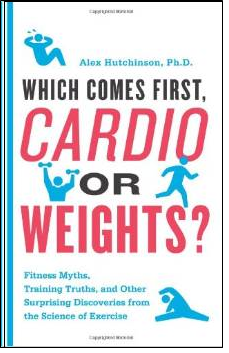
So I took a break and finished reading the book, I recently bought: “Which Comes First, Cardio or Weights? Fitness Myths, Training Truths and Other Surprising Discoveries from the Science of Exercise”, by Alex Hutchison, Ph.D.

Picture 2

The book offers answers to numerous frequently asked questions regarding exercise citing the latest in scientific research in the field of Sports Medicine. And, of course, that includes, the very poignant question on the book cover.

If you want to get to the punchline from the book, here is an excerpt from the last chapter where Hutchison offers the following as a summary:

“..Knowing is half the battle. The other half is the real challenge – putting the knowledge into practice. To that end, I hope you’ll take the following three messages from this book:

  1. Do Something rather than nothing: …if there’s one overriding theme in the research presented here, it’s that any exercise, in almost any amount, brings significant and immediate health benefits. Start doing it, and worry about getting it right later.
  2. Figure out your goals and monitor your progress: …Think carefully about what you hope to achieve in six months, a year, five years – bearing in mind the aphorism that most people overestimate what they can achieve in the short term and underestimate what they can achieve over the long term. Choose a program that will move you toward those goals and monitor your progress.. If you don’t start to see progress after 6 to 12 months, consider whether your program is appropriate for you goals.
  3. Try something new. Whenever researchers line up two or more exercise techniques against each other, the conclusion is almost never “A is better than B” or “A and B are the same”. Instead, it’s, “A has these strengths and weaknesses, while B has these strengths and weaknesses” Moreover, all programs suffer from diminishing returns after a few years… Trying something new every now and then will force your body to adapt in new ways, keep you mentally fresh.”

Well, this is not quite the answer I was searching for. But it seems to be the reality out there.

It is also a good working strategy. And, is pretty close to the one I have personally been following.

What do you think?

What are your thoughts on this topic?

I would love to hear from you.


Post #29 – Eating for Optimal Health Part VIII – Add or subtract specific foods based on your personal needs

Tags

, , ,

In blog post of 9/29/2014: So, what should you eat for optimal health?, I listed the seven basic principles I have extracted from the many diet books and resources I have studied. These principles are:

  1. What you eat, how much you eat and when you eat, all matter
  2. Eat clean
  3. Eat lots of vegetables and fruits
  4. Use only healthy fats and fat sources
  5. Incorporate sufficient proteins in your diet
  6. Best beverage to drink is pure water
  7. Add or subtract specific foods based on your personal needs

In the last posts, we discussed the first six of these principles. Today, in the last blog post of this series, let’s focus on the seventh principle: Add or subtract specific foods based on your personal needs. And, as usual without any fluff stuff, let’s get to it.

Even though we humans all are of the same species, our bodies are quite unique due to genetic and environmental differences that we grew up in. Because of this uniqueness, it is not unreasonable to have unique needs for what we eat to adapt to our bodies.

Western medicine and nutrition framework can recognize these differences only in terms of different caloric needs based on size, food allergies, intolerance and sensitivities.

However, eastern medicine and nutrition frameworks, offer other ways of matching specific foods to specific unique needs of our bodies.

Let’s explore both of these frameworks that we can use to customize what we eat.

Food Allergies, Intolerance and Sensitivities

As Mayo Clinic page on Food Allergy describes: A true food allergy causes an immune system reaction that affects numerous organs in the body. It can cause a range of symptoms. In some cases, an allergic reaction to a food can be severe or life-threatening (anaphylaxis) — even if past reactions have been mild.

If you have any food allergies, it is important to learn how to recognize a severe allergic reaction and know what to do if one occurs. You may need to carry an emergency epinephrine shot (EpiPen, Auvi-Q, others) for emergency self-treatment.

In contrast, food intolerance symptoms are generally less serious and often limited to digestive problems. But these can also be the cause of chronic issues including excess weight, obesity, leaky gut and many other related issues.

Causes of food intolerance include:

  • Absence of an enzyme needed to fully digest a food. Lactose intolerance is a common example.
  • Irritable bowel syndrome. This chronic condition can cause cramping, constipation and diarrhea.
  • Food poisoning. Toxins such as bacteria in spoiled food can cause severe digestive symptoms.
  • Sensitivity to food additives. For example, sulfites used to preserve dried fruit, canned goods and wine can trigger asthma attacks in sensitive people. Mono sodium glutamate (MSG) often used in Chinese cooking can cause digestive issues.
  • Recurring stress or psychological factors. Sometimes the mere thought of a food may make you sick. The reason is not fully understood.
  • Celiac disease. Celiac disease has some features of a true food allergy because it involves the immune system. However, symptoms are mostly gastrointestinal, and people with celiac disease are not at risk of anaphylaxis. This chronic digestive condition is triggered by eating gluten, a protein found in wheat and other grains.

With the recent research in micro biome or gut bacteria, there is mounting evidence that many of the food sensitivities and even food allergies can be cured by improving the gut bacteria.

So, it is important to understand personal food allergies, intolerances and sensitivities. And, then find workarounds or solutions to those.

Here is one quick anecdote on this topic.

Several years ago, often around menstruation time, my wife Kimberly used to have abdominal pains, sometimes quite severe and debilitating. So, we started chasing the issue. Doctors did various tests to diagnose it, but no luck. She even subjected herself to a painful colonoscopy. Radiologist pointed out inflammation at the place where her colon turns. But he could not argue why that would cause issues she had been experiencing. They even started using the “C” word for some stomach cancer, which kind of freaked her out emotionally.

During this time, I started keeping a sort of diary of her lifestyle. I noticed that every time her sister or mother visited us, for the period that followed she would have severe pains. I thought that was rather curious.

You see, ever since, I became vegetarian, she did not eat much meat. We did not cook much meat at home. And, even when we ate out, she generally preferred to share what I would eat, which would be vegetarian fair. But every time her sister or mother would visit, they will have several meals out at the restaurants and she would indulge in lots of meats, especially red meats.

Once I figured this out, I asked her to experiment with keeping meat to minimum and absolutely no red meat for a few months – which she did faithfully. And, lo and behold, her pains went away. She experimented with adding the red meat back, with the result of pains also being back. Having learned that lesson, she has now stuck to the lifestyle of mostly no red meat and pains have been gone.

Eastern medicine and nutrition frameworks

Eastern medicine and nutrition frameworks provide different methods (and some would argue, much more precise methods) of matching foods to a person’s specific needs.

I am most familiar with the Indian Ayuervedic system so I will briefly share that here.

According to Ayurveda, there are three primary body types: Vata, Pitta and Kapha.  These body types are also called Doshas.

We are born with either one of these three, or some combination of these, i.e., Vata-Pitta, Vata-Kapha, Pitta-Kapha or Vata-Pitta-Kapha types.

The primary body types are made up of a combination of five basic elements of nature: Earth, Water, Fire, Wind, and Space.

Earth + Water = Kapha

Fire + Water = Pitta

Wind + Space = Vata

By looking at the nature of the constituent elements, you can probably quickly guess the properties associated with each Dosha or body type.

Kapha person would thus be very “earthy”, heavier musculature, gains weight quickly, has moist or oily skin, likes to stays settled in a place, is slow and steady, is often cold and smooth.

Pitta person would be hot, intense, light, flexible, slightly oily, fluid, sour smelling.

Vata person will have dry skin, be on the move all the time, is often cold, rough adept to change, subtle quick and light.

The theory is that we all have an inherent body type that corresponds to our inborn nature. Eating foods and living lifestyle that take us away from our inherent Doshas cause stresses on our bodies and in turn cause issues. Progressed to advanced stages, these perturbations in the body become clinical symptoms that are discovered as ailments in the context of western medicine.

Foods on the other hand, in Ayurveda, are categorized as sweet, sour, salty, stringent, bitter and pungent. Based on the nature of food, it could either aggravate or pacify a particular body type or Dosha.

Kapha is

  • Balanced by pungent, bitter, astringent, light, dry and hot foods
  • Aggravated by sweet, sour and salty foods, heavy, oily and cold

Pitta is

  • Balanced by bitter, sweet, astringent, cold, heavy and dry foods
  • Aggravated by pungent, sour, salty, hot, light and oily foods

Vata is

  • Balanced by salt, sour, sweet, heavy, oily and hot foods
  • Aggravated by pungent, bitter, astringent, cold, dry, light foods

An Ayuervedic practitioner’s goal is to uncover any differences between inherent body type and the present body type and to recommend foods and lifestyle that will bring the body to the back the inherent body type.

As the body realigns with its inherent Doshas, different types of issues and ailments just recede and disappear.

This,  of course, is a pretty deep topic by itself.

“Perfect Health – A complete mind body guide”, a book by Deepak Chopra, M.D., is a very accessible book that explains these Ayuervedic principles and practices. Based on the Ayuervedic theory, the book offers very practical means for matching foods to one’s specific needs and/or make adjustments if you feel any “stresses” in your body.

What do you think of this approach?

Do you feel that this provides guidance on how to adjust your diet to match your personal needs?

Do you see a hole in this approach? What would you do differently?