There is an old joke. Question: How do you live long? Answer: Just keep breathing.
Joke aside, when was the last time you gave any thought to breathing?
Are you breathing too much? Too little? Just enough?
Are you breathing the right way?
Are you breathing optimally?
What kind of impact breath can have on your health?
Can you cure chronic diseases by breathing in a certain way?
Can you cause chronic diseases by NOT breathing in a proper way?
Being a student of yoga and meditation, I have been quite aware of breath and different ways of breathing and subjectively feeling differently when breathing certain way. And I am always curious about finding other methods of breathing.

So, when I picked up James Nestor’s book: The New Science of Lost Art, I thought I might learn a few more distinctions about breathing. I was blown away by how much I did not know about breathing and how big an impact breathing can have on our health.
Nestor describes how the ancient wisdom of breathing, has been discovered and rediscovered over time by people he calls Pulmonauts, i.e., the breath explorers. He beautiful weaves this ancient wisdom with explanations we now know through science along with his personal exploration and experiences.
The book is well worth the read. I definitely learned a lot.
Here are some nuggets that I picked up from this book:
- Keep Your Mouth Shut – especially When Sleeping. As Nestor explains:
“During the deepest, most restful stages of sleep, the pituitary gland, a pea-size ball at the base of the brain, secretes hormones that control the release of adrenaline, endorphins, growth hormone, and other substances, including vasopressin, which communicates with cells to store more water. This is how animals can sleep through the night without feeling thirsty or needing to relieve themselves.
But if the body has inadequate time in deep sleep, as it does when it experiences chronic sleep apnea, vasopressin won’t be secreted normally. The kidneys will release water, which triggers the need to urinate and signals to our brains that we should consume more liquid. We get thirsty, and we need to pee more. A lack of vasopressin explains not only my own irritable bladder but the constant, seemingly unquenchable thirst I have every night.”
So, here is an interesting vicious circle: if you are not getting enough deep sleep, you would wake up more often due to inadequate vasopressin. And, if you wake up more often, you are probably not getting enough deep sleep.
Simple Solution: Tape you mouth shut when you are sleeping. Really!! It is that simple. And watch how you sleep and all biomarkers that good sleep brings improve. It may even improve or eliminate sleep apnea. From his own experience of trial and error, Nestor recommends 3M Nexcare Durapore “durable cloth” tape, to tape your mouth shut. It works great, I can vouch for it.
2. You Can Use Breathing to Activate Parasympathetic or Sympathetic nervous System: As Nestor explains:
“The right nostril is a gas pedal. When you’re inhaling primarily through this channel, circulation speeds up, your body gets hotter, and cortisol levels, blood pressure, and heart rate all increase. This happens because breathing through the right side of the nose activates the sympathetic nervous system, the “fight or flight” mechanism that puts the body in a more elevated state of alertness and readiness.
The left nostril is more deeply connected to the parasympathetic nervous system, the rest-and-relax side that lowers blood pressure, cools the body, and reduces anxiety.”
Now how cool is that!
3. Carbon Dioxide is Even More Important Than Oxygen: I am sure you are saying, ”What?!” – just like I did when I read about this. When you take a slow inhale followed by a very slow exhale or when you just slow down your breathing, if you feel calm settle over you that is due to increasing carbon content in your blood and tissues. If you are hyperventilating, it is the opposite – that is when you need to breath inside a paper bag to calm yourself down.
This is also how our bodies determine how fast and often we breathe, not by the amount of oxygen, but by the level of carbon dioxide.
Simple Tip: Take long exhales and slow down your breathing. Basically, breathe but breathe less.
4. Optimal Breath: “It turns out that the most efficient breathing rhythm occurred when both the length of respirations and total breaths per minute were locked in to a spooky symmetry: 5.5-second inhales followed by 5.5-second exhales, which works out almost exactly to 5.5 breaths a minute.” This is the pattern of chanting of Om, rosary, chanting of common Buddhist mantras and many other ancient rituals.
5. Secret to Youthful Face is Chewing: “What?!”, you say again. This was definitely new one for me. Here is verbatim from Nestor’s book:
‘Unlike other bones in the body, the bone that makes up the center of the face, called the maxilla, is made of a membrane bone that’s highly plastic. The maxilla can remodel and grow more dense into our 70s, and likely longer. “You, me, whoever—we can grow bone at any age,” Belfor told me. All we need are stem cells. And the way we produce and signal stem cells to build more maxilla bone in the face is by engaging the masseter—by clamping down on the back molars over and over.’
Simple Tip: Find excuses to chew with back molar as often as you can. There you go – 32 chews per bite that mom told us is validated by science now.
6. Hold your Breath to Eliminate Anxiety and Fear:
“…All this suggests that for the past hundred years psychologists may have been treating chronic fears, and all the anxieties that come with them, in the wrong way. Fears weren’t just a mental problem, and they couldn’t be treated by simply getting patients to think differently. Fears and anxiety had a physical manifestation, too. They could be generated from outside the amygdalae, from within a more ancient part of the reptilian brain.
Eighteen percent of Americans suffer from some form of anxiety or panic, with these numbers rising every year. Perhaps the best step in treating them, and hundreds of millions of others around the world, was by first conditioning the central chemoreceptors and the rest of the brain to become more flexible to carbon dioxide levels. By teaching anxious people the art of holding their breath.”
Simple Tip: To calm your anxiety don’t just take a deep breath, HOLD your breath.
Bottom Line: The book has a lot more to offer, but here are some nuggets in summary:
- Tape you mouth shut when you are sleeping. Really!! It will improve your sleep and give you all benefits that good sleep does
- You can trigger sympathetic or parasympathetic nervous systems by simply breathing through your right nose or left nose
- Take long exhales and slow down your breathing. Basically, breathe but breathe less.
- Optimal breath is: 5.5-second inhales followed by 5.5-second exhales, which works out almost exactly to 5.5 breaths a minute.
- Find excuses to chew with back molar as often as you can.
- To calm your anxiety don’t just take a deep breath, HOLD your breath.
What do you think?
Have you explored different ways of breathing?
What worked or not worked for you?
What benefits or difficulties have you faced due to proper or improper breathing?
I and the readers of this blog would love to hear from you and learn from you.
Please click on Comment to leave your comments or question so others can benefit from your input.
 As I mentioned in my previous post #58, I consider Michael Greger’s website
 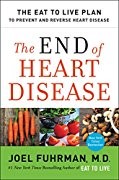 In my blog post #9 – When it comes to health, vitality and aging what is really possible?, I had discussed the book, Prevent and Reverse Hearth Disease by Caldwell B. Esselstyn, Jr. M.D. In this book, Dr. Fuhrman’s has updated research on preventing and reversing heart disease. Case studies are mind blowing. He not only gives research but actually prescription on what you should actually eat and even very specific meal plans. Dr. Furhman promises his patients to let him decide what they eat for six weeks and then based on the result they can then decide what to eat. Most of them become converts to his prescription of nutrition after seeing the results.
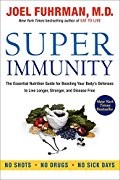 I did a series for posts #51-#54 on How to Optimize Your Immune System. In this book, Dr. Fuhrman offers a lot more research and very practical ways to build immunity so your body can fight whatever comes its way – not only flues and colds, but also other infections and even cancer. Cancer after-all is just DNA mutation that body fights all day long. Only when our immune system is NOT capable of handling the mutated DNA, it starts to take over the organs unchecked. Again, the book includes nutrition meal plans, recipes to put into practice his philosophy – not just eat food that is packed with desired micro-nutrients, but eat a lot of it.
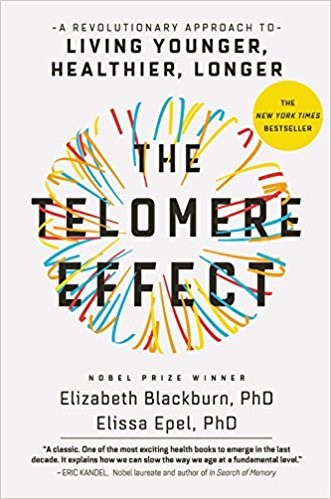 In blog post #50, I discussed how to optimize your health by maximizing your telomeres. Elizabeth Blackburh received Nobel Prize for her research in telomeres. Telomeres are the end-caps at the ends of our DNA strands like little plastic wraps at the end of shoe laces. If the little plastic wraps are damaged shoe laces become useless, so is the case with the DNA. The length of telomeres correlate with the remaining lifespan. Dr. Blackburn shares the latest research in lay-person language and shares the different methods by which we can increase the length of our telomeres. Reading this book, it should not come as surprise to you that the lifestyle choices I discussed in my Post #59, all help increase the lengths of your telomeres.
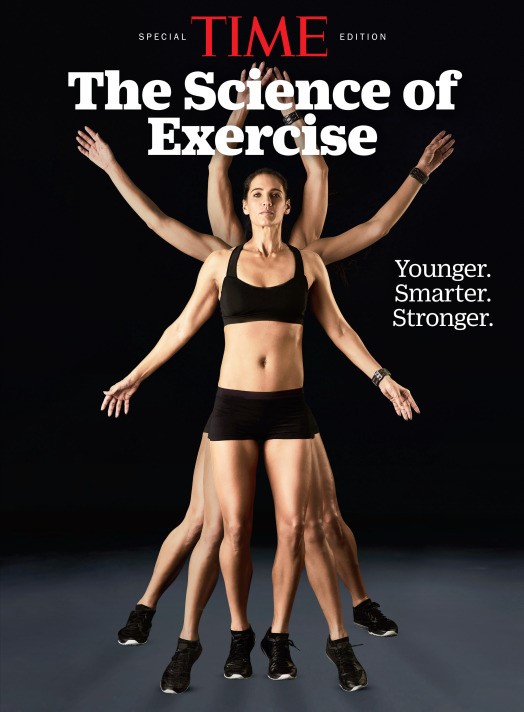 Time did a fantastic job in summarizing the latest in science of exercise in this special Time Magazine publication. If you needed any further evidence how exercise impacts health and lifespan, I believe this publication will deliver, without having to read some big tome. The issue spans many diverse topics: cardio vs. weights, high intensity interval training, running, swimming, yoga and other exercise modalities.
 In my blog post #17 – Is meditation an effective antidote to stress, I talk about Transcendental Meditation or TM as a very effective and well-researched means for combating stress. Science of Being and Art of Living is book compiled based on lectures by Maharishi Mahesh, who introduced TM to the West. He also founded the TM movement that has established TM Centers pretty much in all major cities throughout the world. While first part of the book serves as evidence and motivation for TM, the later parts are more for the practitioners and advanced students of TM and Yoga.
 A few months ago, I got a chance to meet and attend a work shop by Dr. Levy, who has spent all his life building bridges between Western medicine and Eastern philosophies of yoga and meditation. Dr. Levy talks about how to prevent and reverse heart diseases by tackling the most insidious of the issues that impact heart health, i.e., Stress. This manual is accompanied by CDs on which you will find and can actually use his hypnosis techniques for relieving stress and anxiety.
 In this more recent publication, The Happiness Sutra, Dr. Levy further delves into the four different types of stresses humans face and how best to deal with all four types of stresses. This book also has a CD that you can listen to to get the benefit of Dr. Levy’s hypnosis methods for relieving stress.
 Lissa Rankin, M.D.’s book Mind Over Medicine is a great case study of extreme stress brought on modern living and by our current medical system. Dr. Rankin, a practicing OB GYN, quit her practice of medicine because of the numerous health and personal issues brought on by stress from her profession. She eventually found ways to heal herself and then learned to apply her new found knowledge to become a true healer, without becoming slave to the medical system.

 Purposely Live to120