[I took almost two years of hiatus from writing my blogs posts. My knee rehab had regressed, which felt very disappointing. I did not really feel that it was yet appropriate to write about this topic yet. In any case, here it is – I still wanted to complete this topic, before moving on to something else.]
A little over now almost 4 years ago, I hurt my knee. I was doing some vigorous aerobic workout style dancing. I might have twisted my right knee, and it started to hurt really badly. I thought it would be fine in a couple of weeks by giving it the usual TLC. But it took a long time to heal it. And it turned out to be quite a journey and an interesting opportunity to learn.
Whenever I talk to my contemporaries, the topic of knee pain comes up frequently. So, I thought I would share here my journey of healing my knee pain and more importantly the resources I found useful. Trust others will find this information useful.
In Part 3 of this series of blog posts, I share different resources for the major underlying causes of knee issues including atrophied muscles, ligaments and tendons and how to rehab and strengthen those.
History and Background
You see I have been dealing with knee pain off and on for a long time. Over 30 years ago, I took up the goal of running a marathon. I had an ultra-marathon runner Stu Mittleman, who set the world record in 1,000-mile run, to create a program for me. I started training in earnest. Ran my first competitive 5K. And then my right knee started hurting when I ran. I could not figure out how to run pain free. So, that was the end of my marathon running goal.
Since that episode, over the last thirty years, I have been working on bringing my knee functionally to 100%, judging by the capacity and capability of my left knee. It is still at 100%, but it is the closest it has come to that goal in thirty years.
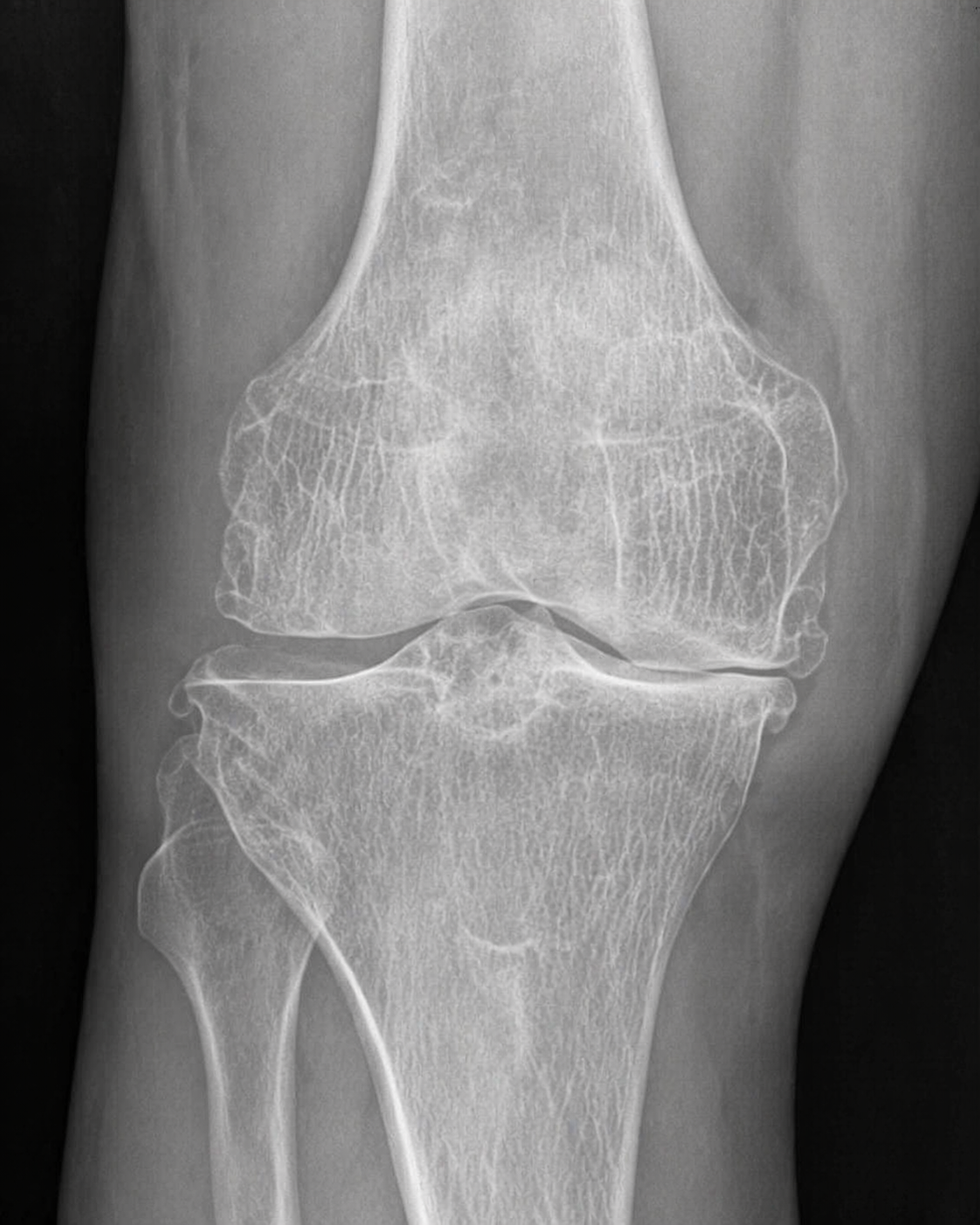
With the help of orthopedic doctors, I was able to diagnose one of the causes of my knee pain. I had a case of mild arthritis. Over the years and at my check-up about four years ago, I was told it was more like mild to moderate. About a year ago, I re-did X-rays and MRI. The knee cartilage showed degenerations in all three compartments and so the doctors started to characterize my knee arthritis as moderate to severe.
Additionally, I started to feel pain in my right glute, in the gluteus medius area. While skiing during the prior winter, I fell on my right side, so I thought that fall might have been the reason.
Still determined to stay fully functional and pain free, I continued my healing journey.
Physical Therapy to Rehab Atrophy of the Right Leg
For my gluteus pain, Orthopedic doctor referred me to a Physical Therapist. PT tested strengths of my legs and quickly demonstrated that my right adductors, abductors and glues were much weaker compared to the left leg. I figured, maybe underuse of my right leg due to pain, muscles, tendons and ligaments had atrophied. So, I signed up for 8 weeks, twice a week, therapy to strengthen and balance my legs.
I shared the same information with my physical trainer. So, in addition to the PT, both while working with the trainer and by myself, I started to focus on strengthening my right glutes, adductors and abductors.
All that helped. But only somewhat. I continued to have symptoms of pain in my glutes every time I squatted and feel tightness on the outside of my right knee. In addition, I would sometimes notice soreness in my right calf as well.
Stability of the Knee through Back Stabilization
Researching for my glute issue led me to Stuart McGill, Professor at McGill University in Canada who has dedicated his career to understanding and alleviating back pain. Reading his books, I found that the stability of knee can come from stability of the back. Stuart McGill has a very popular three exercise protocol, called Stuart McGill’s Big 3. I discovered that whenever I did his three exercises, prescribed, modified crunches, bird dog, and side planks, my knee felt much more stable and pain free. There are lots of YouTube videos on Big 3. For example, here is one McGill Big 3 Core Routine .
Physiatrist
I got a referral to a physiatrist, who manages pain without surgical interventions. Upon examination, the first thing he did was to get a knee X-ray and MRI of my lower back. X-ray showed moderate to severe degeneration of the knee cartilage. MRI showed degeneration of my cartilage between my L4 and L5 and S1. He recommended an epidural injection to the lumbar to “calm” any inflammation and then reassess.
Epidural made a dramatic impact on my glute pain. So, basically nerves (sciatic) existing between L4, L5 and S1 were getting irritated and so whenever I squatted. It also alleviated pain in the calf. It made tightness on the outside of my right knee.
MRI of the right knee showed some degeneration of the ACL also.
Next, he recommended injections of hyaluronic acid to alleviate lack of synovial fluids in the knee joint and a platelets rich plasm or PRP as a complementary therapy.
By now, I have already done two courses of hyaluronic acid, another course of epidural and one course of PRP.
I found both injections of hyaluronic acid and PRP to be incrementally beneficial for improved mobility and reduced pain.
Strength, Flexibility and Mobility Training
My trainer and I have continued to focus on strengthening all aspects of my legs. Doing bilateral and unilateral strengthening of glutes, quads, hamstrings, calves, and hamstrings. We have also been focusing on the joints up and down from the knees by improving end-range flexion, extension, rotation mobility of of knees, ankles, hips and pelvis.
Scott Hogans’s book, Built from Broken has been indispensable in this respect. Especially, healing tendinopathy. It is amazing how long it takes and how much patience is required to heal tendons and ligaments. Yet it can be done.
Pranic Healing
Last year, my wife and I learned Pranic Healing from Master Co. I have had healers do the healing on my knee with particular emphasis on cartilage regeneration. Yes, there are Pranic healing protocols that claim will regenerate cartilage. I don’t have any proof yet that the session of healings have actually regenerated cartilage. But it will be fascinating to see if there are signs of cartilage regeneration in future X-rays or MRI images.
Bottom Line:
With all that work, right knee is not 100% yet. However, it is very functional and continues to get better.
On my most recent ski trip, I was surprised to find that both my left and right ski turns were symmetrical. I have always felt I preferred one side of my turn more than other. Skiing this time, I could not remember which side I used to prefer!
I trust others can benefit from the research, lessons, experience and resources that I have shared here from my journey of staying close to fully functional for over thirty years in spite of degeneration in my knee due to osteoarthritis.
Here are some key takeaways.
From my research and experience, I have found that while cartilage degeneration may be the underlying cause of osteoarthritis knee pain, if caught early fixing the underlying cause such as misalignment of hip and knee joints can prevent the issue from getting worse or may even heal the knee joint.
There can also be other issues up and down the chain, including degeneration in the spine, e.g. lumbar in my case.
Also, once degeneration has occurred, it can lead to atrophy of muscles, tendons and ligaments that can accelerate pain and disability.
Focusing on alleviating the structural issues along with working on strengthening muscles and all related connective tissues not just the knee but up and down from the knee can keep one functional for a long time.
Of course, this is not medical advice, and you should check with a medical doctor about your specific situation.
What are your thoughts or experiences on this subject?
Would love to hear from you and learn from you.
Please click on Comment to leave your comments or question so others can benefit from your input.

