Post #18 – How to measure wellness or vitality?

“So, how are you feeling?” my trainer always asks me before we start any work out session.

“How are you?” We ask each other all the time.

Checking-in at Vistage, a CEO group that I belong to, we always rate our health and personal state from scale of 1 to 10 and then describe to the group what is happening in our lives for us to rate it that way

“So, how does one define health or wellness” is a question that frequently comes up when I get into such conversation with people.

Is it lack of aches or pains, becoming free of medicines, being not flagged for any biomarkers in the results of our blood work by being within the range, not huffing and puffing while going up the stairs at the office or home? Or, is it being in some higher state of vitality?

Some people are satisfied with answers like, “Okay”, “Pretty Good”, “Great”, or “Stressed”.

But that is not very satisfying, if you are like me and believe in the old adage, “You get what you measure”.

My personal goal is to physically and emotionally live in a state of 9 or 10 at least 90% of the time, 10 being the most desirable state.

So, is there a quick and easy way to quantify such subjective measures?

I will talk about two different methods.

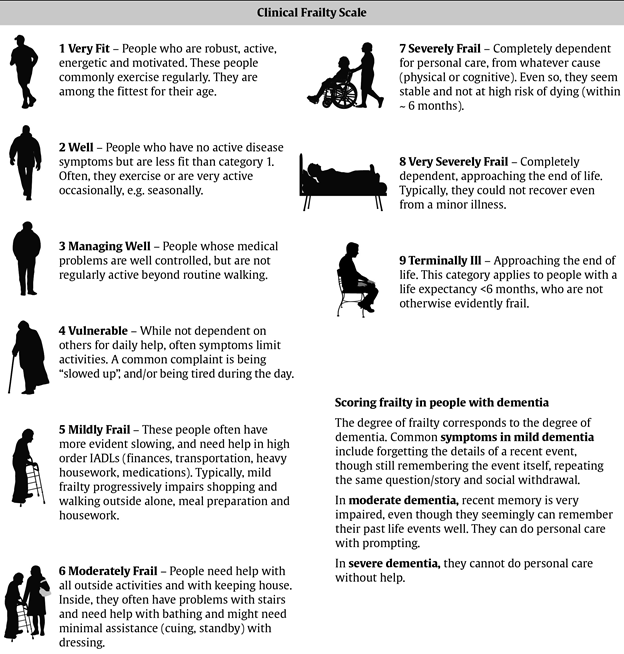
The first is an observational evaluation based on a 9-Point Clinical Frailty Scale developed by the Canadian Study of Health and Aging. This scale, shown below, is actually used in geriatric evaluations and research in Canada. (In this scale 1 is most healthy and 9 is least healthy). I find the descriptions of various levels quite telling and fairly precise.

Clinical Frailty Scale

The second one is my favorite. I came across this method many years ago, when I was evaluating the impact of some super green algae based supplement. Along with the supplement, the company sent me a journal to daily record my physical and emotional state. And, then to see for myself, if the supplement did any good.

Here I have changed some of the labels slightly and recalibrated the scale to go from 10 to 1.

Health Scale

So, for me personally, if I want to check in with myself and see where I am, this is the scale I like to use.

If I am not at 9 or above, then I can quickly analyze the root cause, the solutions and then take action to get back to 9 or above.

This is also very useful to assess the impact of any lifestyle changes, exercise, yoga, dietary changes, supplements, etc., to track physical and emotional health over a certain period.

What about you, do you think it is a useful exercise to measure or calibrate where you are physically and emotionally and track it?

How do you measure where you are physically and emotionally?

I would love to hear from you.

Post #17 – Is meditation an effective antidote to stress?

30 years ago when I co-founded A&T Systems, Inc., I would passionately talk to others in general conversations about the company and its future possibilities. Which, of course, I still do today. No surprise there. But one thing I found surprising were the comments I would get pretty frequently in response, such as: So how would you handle stress of running a business?, or you want to have a heart attack at young age?

So, when one day in 1986, I saw a commercial on a local TV station, about Transcendental Meditation (TM) and how that was an indispensable tool for managing stress, I quickly signed up for an introductory meeting. At the meeting, the organizers served up lots of evidence on how TM helps manage and reduce stress.

My wife, Kimberly, and I were both sold. We signed up right there. That weekend, we learned the TM technique and were told to do the meditation for 20 minutes twice a day. There were three follow up sessions on the following three days in which the teacher explained the theory behind the practice and answered the questions as they arose through the experience of actually doing the meditation. In these sessions, the teacher also did ‘checking’, a process whereby the teacher makes sure that we are practicing the meditation correctly.

After these initial sessions, we went for checking after a couple of weeks, then couple of months and then once a year and then every few years.

We immediately started to notice some changes in our lifestyle. Before learning TM, after work, I used to come home and grab a beer, turn on the TV and unwind. Now, I would come home, do TM and find that I no longer felt the need or desire for a beer. For Kimberly it was not as much beer in the evening, but a cup of coffee first thing in the morning to get going. After starting TM, she would wake up, do TM and then not feel the need or desire for a cup of coffee. She also noticed that the number of cups of coffee she used to drink in a day went down dramatically.

Along the way, we learned that TM is one of the most researched meditation techniques. There are over 350 peer-reviewed research studies. Through this research, there is plenty evidence of the efficacy of the TM for managing stress and a host of other biomarkers for stress, many of those I discussed in the last post. The following are just a couple of examples from the TM website page, Proven effective for stress and anxiety.

Effective for Stress and Anxiety v2

Decresed Cortisol

Recently, many celebrities have started to talk about and promote TM, e.g., Oprah, Seinfeld, Ellen Degeneres, some of them from their personal experience of having practiced TM for many years.

But I am an experiential kind of guy, always asking the question, “But will it work for me?” From my personal experience, I can unequivocally say that it is an indispensable tool to be able to handle stress.

There are days that I get home from work in the evening, when just looking at me Kimberly would says, “You look tired and hungry. Why don’t you eat something right away?” And, I would tell her that I need TM worse than I need food. I just do a 20 minute of TM and then I am refreshed and good to go until bed time.

If anyone talks of being under stress all the time, they usually hear from me about the TM. I recommend TM without any reservations. Because of my proselytizing, In my immediate and extended family, everyone has learned TM – our sons, my brothers, my sister, and their children. I am not sure everyone does TM as regularly as I do, but they all have this tool that they can fall back upon. Our sons and nieces have mentioned of TM being very helpful in dealng with their  college stress.

I have been so impressed with the TM that I have actually gone and learned advanced methods, beyond the basic TM technique that I learned in 1985. I learned what is called Advanced Technique. I have also learned a process of TM that is called TM Sidhi, which requires much more commitment of time and money. TM Sidhi learning culminates into techniques for Yogic Flying, where you offer intention and your body lifts off from the ground.

Of course, there are many other types of mediation. However, I have only incidental or superficial knowledge and experience of these, especially their role in stress management. I am not really able to talk about those with any authority or offer any guidance.

Recently, I have been exposed to a type of meditation called Mindful Meditation. This type of meditation is being taken up in medical schools and universities such as UCLA, and is subject of research for stress reduction and management.

What is your experience with meditation?

Have you found meditation useful method for managing stress?


Post #16 – What is stress really and why is it bad for longevity and health?

Tags

, , , , ,

Stress has become such a common buzz word. We all talk about it. We generally know it is bad for us. It is constantly in the news.

There are exceptions though. Some believe that stress is good, arguing that if you take away the stress you take away the motivation and drive.

But whenever I get into conversation with someone and start to dig a little deeper with questions like, “So, what do you think is stress?” “Why do you think that stress is bad?” Why do you think it is good?” Or, “How do you deal with stress?” The subject becomes very squishy, very quickly.

Even Hans Selye, the person who originally coined the term stress in 1936 in the context of health and spent life-time studying it, at one time threw up his hands and declared, “Everyone knows what stress is, but no one really knows.”

So, let us take the first question first, what is stress, any ways.

Webster’s Dictionary defines Stress as “a state of mental or worry caused by problems in your life, work, etc.”; or, “something that causes strong feelings of worry or anxiety”

According to the American Institute of Stress, another popular definition of stress is, “a condition or feeling experienced when a person perceives that demands exceed the personal and social resources the individual is able to mobilize.”

Few useful concepts, while talking about stress are:

Acute Stress: Fight or flight. The body prepares to defend itself. It takes about 90 minutes for the metabolism to return to normal when the response is over.

Chronic Stress: The cost of daily living: bills, kids, jobs…This is the stress we tend to ignore or push down. Left uncontrolled this stress affects our health- our body and our immune system. This is the type of stress that causes wear and tear on our bodies and can impact health and longevity.

Eustress: “Good stress” in daily life that has positive connotations, e.g., marriage, promotion, child birth, winning money, new friends, graduation

Distress: “Bad stress” in daily life that has negative connotations, e.g., divorce, punishment, injury, negative feelings, financial problems, work difficulties.

So, from  the point of view of theses definitions, the stress is really a subjective concept, based on how we perceive a thing or an event. The same event or activity, say a roller coaster ride, could be a eustress (good stress) for one person and distress for another. This is why psychologists or mental health practitioners often get involved in diagnosing and helping cope with chronic stress.

Although stress is a subjective concept, the impact on our bodies is often very objective and real. We have all experienced the rising of hairs on the back of the neck, the sweats, tension in our gut, racing of heart, dilating of pupils, and pumping of blood in our face, arms and legs.

As the following figure shows, stress starting in mind, causes, a chain reaction of neurological, chemical and biological processes. (Figure is taken from a presentation,Why Stress Is A Far More Important Cause Of Coronary Disease Than Cholesterol, by Paul J. Rosch, M.D., F.A.C.P. President, The American Institute of Stress)

Effects of Stress

Physiological effects of most acute stress events subside about 90 minutes after the conclusion of the stress event. Body returns to normal homeostasis or biological equilibrium.

However, it is the repeated acute stress events or chronic stress that are real cause for concern and take toll on our bodies. The results of such chronic stress can be objectively measured from a host of biomarkers that include (from Biomarkers of Chronic Stress, by Laalithya Konduru):

  • Metabolic Biomarkers: Cholesterol, Albumin, Waist-to-Hip Ratio, Glycosylated Hemoglobin
  • Immunological Biomarkers: IL-6, TNF-α, CRP, IGF-1
  • Neuroendocrine Biomarkers: Cortisol, DHEA, Adrenaline, Noradrenaline, Dopamine, Aldosterone
  • Certain Metabolites, chemical figure prints of cellular processes
  • Modifications in Mitochondria
  • Induction in the Brain of DRR1, a tumor suppressor gene

Most of us recognize some of these biomarkers. Others are quite esoteric. In any case, from this list, it does not take a neuroscientist to figure out that chronic stress can mess with a number of things that are key to our health: insulin, cholesterol, hormones, our immune system, can cause inflammation, reduce energy level in the body and impact working of our brain.

Looks like a real important subject to me, if we want to live healthy life free of chronic diseases for an optimal life span.

What do you think? How do you fee about stress?

In a future post, I would like to explore some anti-dotes to chronic stress

Post #15 – Is taking multivitamin and supplements helpful, harmless or harmful?

Tags

, , ,

So, my son Dan visited us over the last weekend. He is 22, generally eats well, is in great health and has no health issues whatsoever. As he watched me taking my multivitamins and a handful of supplements he asked, “What is all this stuff you are taking Dad? Should I be taking any of this stuff for optimal health?”

So, here is what I told Dan.

Through all my reading and learning, I have come across all three points of view on multivitamins:

  1. Unless you have deficiency in some vitamin or mineral, you don’t really need to take daily vitamins and mineral supplements. If you do, they just get secreted out of the body in urine. So, by taking multivitamin as supplements, all you get is expensive urine.
  2. You have to be careful very careful with the supplements. They can actually cause harm to your body. For example, have you not heard about the study about taking too much antioxidants is harmful?
  3. To get all vitamins and minerals, you really need to eat all the various foods during the week. Besides, many of our fruits and vegetables are depleted of nutrition due to the present day methods of farming. Moreover, there are many studies that demonstrate effectiveness of the many supplements in Optimal Daily Allowance, which can be significantly more than the minimum Required Daily Allowance (RDA). So, not only one should take multivitamins every day, but make sure to take based on optimal daily allowance.

I have come to subscribe to number 3, i.e., for optimal health we must take daily optimal quantity of multivitamins and minerals.

While there is no shortage of material out there discussing this topic, I would briefly share here some information and sources that have influenced my thinking.

Kimberly and I attended a presentation by Chris D’Adamo, Ph.D., Assistant Professor and Director of Research at Center of Integrative Medicine at the University of Maryland, School of Medicine, in Baltimore, MD. I found his presentation, D’ADAMO – Supplementing Your Dietary Supplement IQ – 2013 to be very objective and informative. He discussed each vitamin and mineral, their impact on health, the required and optimal intake and sources from which we get those. And, culturally, do we get sufficient quantity or not. Bottom line: Consider taking the following: Multivitamin, Vitamin D, Omega-3 Fatty Acids and Probiotics. Add other supplements for specific issues as needed.

Pretty much the same conclusion is described in Blood Sugar Solution”, by Dr. Mark Hyman, “The Life Plan: How Any Man Can Achieve Lasting Health, Great Sex, and a Stronger, Leaner Body”, by Jeffry S. Life M.D. Ph.D., and in The Joe Dillon Difference, by Joe Dillon.

The next question is which brand. Should I just go to Safeway, Giant, Cosco and pick the cheapest multivitamin? Is there difference between any of these brands?

Before you pick a brand, I advised Dan, you need to do some research, since there are no guidelines or standards or compliance audits for supplements.

Multivitaminguide compares and ranks multivitamin brands. ConsumerLabs also tests supplements and assigns Approved or Not Approved designations. These websites claim they have tested brands for composition, bioavailability, safety and potency.

From the Multivitaminguide check out the top five. Some of them have extensive information on what is in the capsules and why. For example, two of the top five brand websites, Xtend-life and LifeExtension, describe in detail not only the different ingredients, but also cite research studies from where they derive the reasons for including a particular ingredient as well as the quantity of the ingredient.

National Institute of Health, Office of Dietary Supplements is also a great place to get educated on this subject.

You will also notice that in addition to the basic 26 vitamins and mineral, some multivitamins on the list (including the ones from Xtend-life and LifeExtension) have other ingredients, e.g., green tea extract, Lycopene (from tomatoes, alfalfa extract etc. So, that becomes another consideration in selecting a multivitamin. Do you want to add these other ingredient, “everyone” is talking about being important for wellness, curcumin, ginger, turmeric, resveratrol (from Red wine) and so many others.

Given all this information, what would I recommend? Just like Dr. D’Admo recommends: a good multivitamin, omega-3’s, vitamin D and probiotics as a baseline. Then add specific supplements that you may need due to specific health condition.

These days, I am taking the following:

  1. Xtend-life Men’s Total Balance Premium. Comes in 7 capsule a day
  2. Xtend-life Omega 3 / QH Ultra. 4 capsules a day.
  3. Nature’s Bounty 1200 mg Flaxseed Oil Softgels. 2 capsules a day
  4. Vitamin D3 2000 mg. One capsule a day
  5. Raw Probiotics – Ultimate Care. One capsule a day. Just today ordered for the first time.
  6. Nature’s Plus – Extended Release 600mg Red Yeast Rice. 2 capsules a day for managing my cholesterol.
  7. Now Foods Calcium Citrate Plus Caps 600mg, 2 a day for bone health.
  8. Cosamin ASU Active People Capsule. 2 a day for joint health
  9. Male Rejuvinator. 3 capsules a day for Prostate Health
  10. Life Extension Super MiraForte with Standardized Lignans. 4 capsules a days. Added recently to restore Testosterone level – indicated as low by blood work. Too early to say if it works.
  11. Miracle Phytoceramides. One capsule a day. Another experiment for healthy moist skin and wrinkle prevention.

So, based on my experience, I advised Dan to read up some of the related literature and start with the following:

  1. Xtend-life Multi-Xtra. $18.95 + 4.49 shipping from Amazon or Xtend-life.com. 2 capsule a day.
  2. Xtend-life Omega 3 / DHA Fish Oil. $17.95 + 4.49 shipping from Amazon or Xtend-life.com. 2 capsules a day.
  3. Nature’s Bounty 1200 mg Flaxseed Oil Softgels. $8.95 from Amazon. 1 capsules a day
  4. Nature’s Bounty Vitamin D3 2000 mg $11.52 from Amazon for 240 capsules. One capsule a day

You should take it for three months and see how you feel. Then may be stop taking it for a week or two and see how you feel. Based on that comparison you should be able to see for yourself if it is worthwhile for you to keep taking these.

Dan told me that this was a good topic for my future blog posts. So, here it is Dan and feel free to share it with others.

What is your experience with multivitamins and supplements?

Do you have your favorite brands or supplements that have had major impact on your physical and mental health?

Post #14 – Want to know how to quickly revitalize yourself?

Tags

,

We have all heard – sitting all day is one of the worst things we can do. Yet, that is exactly what most of us do, and do a lot of it, whether at the office or at home, or traveling. Sitting for long periods, we lose vitality, our muscles weaken, our joints lose flexibility and range of motion, lymph fluid stays stagnant, posture gets deformed, blood circulation is diminished, our eyes, neck and shoulders feel strained, and host of other issues can start creeping up.

So, I started thinking of developing a quick routine that could revitalize my body, can be done in the office, home or anywhere, e.g., in an airplane or at a rest stop on the highway. Based on what I have learned from the various coaches and masters over the years and have been practicing in parts and pieces, I put together a simple, yet complete routine. I started asking everyone at our office at A&T Systems to do it in the afternoon everyday. We have had a very positive feedback on this program.

This is how we do it at our office.

Three minutes before the stretch time, on our paging system, receptionist invites everyone to join the stretch. Those who are able to, get together in a conference room at 3:15pm and then someone from the group leads the stretch. Initially, for a few weeks, I led the stretch. Then, I wrote the routine down and now with the detailed instructions provided, anyone can lead it.

I would suggest that you try it for few days and if you have a positive experience, figure out how to add it your lifestyle to increase vigor and vitality.

I would love to hear what you think of it.

What was your experience with it?

Did you experience a shift in your energy level?

Did you find yourself better physically and emotionally?

Do you have a favorite routine to vitalize and invigorate yourself?

So, here are the instructions.

HINT: It is helpful to print the following instruction in an enlarged font, so it is easier to read as you are doing or leading the routine.

15 Minute Routine to Revitalize

Set up music (140-150 beats per minute) – For example, Pandora Radio Station KernKraft 400.

  1. Begin with stretches to flex the body (2 times)

a. Interlock fingers of both hands

b. Stretch up & Groan

c. Stretch to the left;   Stretch to the right

d. Stretch to the back; Stretch to the front

2. March in place to get blood and lymph fluids moving                                     

a. March for 20 seconds in-place

b. Then, while marching

i.  Push arms forward palms open (4 times)

ii.  Push arms to the side (4 times)

iii. Push arms up (4 times)

iv.  Hug yourself (6 times)

v.  Spread arms 45 degree higher than shoulders, Pulse backwards (4 times)

vi.  Spread arms at shoulder height, Pulse backwards (4 times)

vii.  Spread arms 45 degrees lower than shoulder, Pulse backwards (4 times)

c. March lifting knees high

i.  Thighs parallel to the ground (4 times each leg)

ii.  Add twist with opposing elbows (4 times each leg)

d. Jump in place (20 seconds)

i.  Adding arm raises

e. Back to marching in-place to cool down (20 seconds)

f.Shake hands in front, to the side and up

  1. Shake up all the joints

a. Start with Right arm

i.  Flick the fingers (12 time)

ii.  Shake the hand from the wrist (12 times)

iii. Shake the hand and wrist from the elbow (12 times)

iv.  Shake whole arm from the shoulder, nice & loose (6 times)

b. Repeat a. with Left arm

c. Next, start with Right leg

i.  Curl and stretch toes (12 times)

ii.  Left foot up and down from the ankle (6 times)

iii. Left circles from the ankle (6 times)

iv.  Right circles from the ankle (6 times

v.   Shake it all about from the ankle

vi.  Up and down from the knee (6 times)

vii.  Circle left from the knee (6 times)

viii. Circle right from the knee (6 times)

ix.  Swing the entire leg from the hip, nice & loose ( 6 times)

d. Repeat c with Left leg.

  1. Breathing (Stop the music for breathing) – Energizing and Calming Breaths

a. 2 counts IN, 8 counts HOLD, 4 counts OUT

b. Cleansing breath – Slow deep inhale, slow exhale

c. 2 counts IN, 8 counts HOLD, 4 counts OUT

d. Cleansing breath – Slow deep inhale, slow exhale

REMEMBER to take full breaths, fill up belly, then middle chest and then upper chest

e. 3 counts IN, 12 counts HOLD, 6 counts OUT

f. Cleansing breath – Slow deep inhale, slow exhale

g. 3 counts IN, 12 counts HOLD, 6 counts OUT

h. Cleansing breath – Slow deep inhale, slow exhale

REMEMBER to soften your face and put a smile on your face

i.  4 counts IN, 16 counts HOLD, 8 counts OUT

j. Cleansing breath – Slow deep inhale, slow exhale

REMEMBER to breathe in all the goodness around you and breathe out all negativity

k. 4 counts IN, 16 counts HOLD, 8 counts OUT

l. Cleansing breath – Slow deep inhale, slow exhale

m. 5 counts IN, 20 counts HOLD, 10 counts OUT

n. Cleansing breath – Slow deep inhale, slow exhale

  1. Affirmation

o. Last, turn to your neighbor and give them a double high-five

(If you are doing it all by yourself, then point to yourself with two thumbs)

and say, “YOU ARE AWESOME!!”

Post #13 – Ever heard of Functional Medicine?

Tags

, , , , , , ,

In my previous blog posts, I have talked about curing my allergies, fixing migraines, and curing a whole host of other issues without pharmacological medicines. Yes, actually curing these issues and not just managing or controlling the symptoms.

For the longest amount of time, I found it difficult to talk about to these things with my physicians or even lay people. I must admit it all sounded so much like woo doo even to me as I would talk about it. A common refrain from doctors was, “We only practice evidence based medicine.” I did not know what to believe or not believe, except that from my personal experience (evidence of n=1), I could prove that these things work.

All that changed, when last year Kimberly and I attended the Health and Wellness Conference 2013 at the University of Maryland, School of Medicine at the Center of Integrative Medicine in Baltimore, Maryland. There we heard talks about yoga, Qi Gong, nutrition, meditation, detoxing, and many other so called “alternative” therapies in the setting of Evidence Based Medicine.

Key note speaker was Mark Hyman, MD. He has a private practice Ultra Wellness Center in Massachusetts. He wrote a book, The Blood Sugar Solution, which received endorsement from President Bill Clinton. He talked about the diagnosis and cure of Diabesity, a term he has coined as combination of diabetes and obesity. And, he talked about diabesity in the context of what he called Functional Medicine.

Since then I have studied up quite a bit on Functional Medicine and I do believe that many of my conversations in my blog posts fit in that framework. More I dig into this topic the more entranced I am getting with this topic. I feel that functional medicine is the key to the kingdom, when it comes to wellness, vitality and living the optimal health span and life span.

Jeffrey Bland, Ph.D. is considered “father” of this field. Mark Hyman calls him his mentor. Among Bland’s other accomplishments, he has founded Personalized Lifestyle Medicine Institute and The Institute for Functional Medicine. Recently, he has written a book, “The Disease Delusion, Conquering the Causes of Chronic Illness for a Healthier, Longer, and Happier Life.”

Institute for functional medicine describes functional medicine as follows:

“Functional medicine addresses the underlying causes of disease, using a systems-oriented approach and engaging both patient and practitioner in a therapeutic partnership. It is an evolution in the practice of medicine that better addresses the healthcare needs of the 21st century. By shifting the traditional disease-centered focus of medical practice to a more patient-centered approach, functional medicine addresses the whole person, not just an isolated set of symptoms. Functional medicine practitioners spend time with their patients, listening to their histories and looking at the interactions among genetic, environmental, and lifestyle factors that can influence long-term health and complex, chronic disease. In this way, functional medicine supports the unique expression of health and vitality for each individual.”

So, the basic idea of functional medicine is to take a systems approach to disease and wellness rather than either chasing symptoms or taking germ theory approach that generally focuses on single point of correction. In his book, Jeffrey Bland talks of seven different systems for our bodies:

  1. Assimilation and Elimination
  2. Detoxification
  3. Defense
  4. Cellular Communication
  5. Cellular Transport
  6. Energy
  7. Structure

So the objective in functional medicine is to investigate symptoms to pinpoint one or more of these seven systems that are not working properly and then to change diet, exercise and lifestyle to fix the system imbalance and thereby the diseases and the symptoms.

The end result is often pretty low tech, and may seem underwhelming. That is, implement changes in diet, exercise and lifestyle to redirect expression of certain genes to cure a disease.

However, approach to getting there can be fairly high-tech in identifying the true root cause, identifying the systems that are out of balance and gene expressions that may be responsible for the underlying imbalance. And, as you see from the stories, results can be very profound and almost magical.

If you know someone, who is being treated for certain symptoms of chronic diseases by meds. e.g., high blood pressure, obesity, brain fog, constant fatigue, high cholesterol, inflammation, muscle aches, etc..  The meds being used often lead to side effects that need to be treated by other meds, which in turn are causing other side effects etc.. Such a person is the perfect candidates for functional medicine.

Have you heard of functional medicine?

Do you have any experience with functional medicine?

I have been looking for good certified functional medicine practitioners in our area that we could consult and also recommend to our friends and family. We have access to some lists, but no personal experience yet. Do you know of such a practitioner?

I would love to learn if you know someone.

Post #12 – My SECOND Year of Experience with Bikram Yoga

Tags

, , , , ,

Here is my SECOND year of experience with Bikram Yoga that I wrote down in February 2014. This makes a nice sequel to my last week’s blog post, where I shared the first year of experience.

Today is Presidents Day 2014, two years after I started the Bikram Yoga. It seems like a good time to reflect on my progress with Bikram Yoga.

Experimenting for Regaining Control of Breath

At the beginning of my second year, I started experimenting and also talked to various teachers about my desire to keep control of my breath and conserve energy to perfect my poses. Most of the teachers discouraged skipping an asana, emphasizing that that asana are designed with certain flow in mind. Best suggestion, I thought, came from Rosa. She advised to do the first sets as easy as I needed to and then give my all in the second sets.

I started this technique with almost skipping the first sets. Then slowly I started to do the firsts sets lightly to build endurance and maintain form. I would then give my all in the second set, reminding myself that I could always skip the first set of the following asana if I needed to regain control of my breath. I felt better and better with this method.

Reintroducing Strength Training

One downside I found for doing Bikram only was that after a year I started to feel that my strength was waning. I did not feel as confident in simple things like lifting my laptop brief case, which is about 30lbs. In April 2013, Kimberly and I restarted working out with our trainer Saleem for one day every week. Initially, I would do three times Bikram and one time Saleem every week. For the last few months, I have settled into twice Bikram and one time Saleem. With Saleem’s workouts, my strength is definitely back. With Birkram twice a week, I am able to maintain the flexibility and balance.

Visit to the Egoscue Clinic – Crooked Body Fixers

Another thing I was quite encouraged by was improvements in my knee pain through Bikram. So, I decided to see if I could really get them to be 100% cured. For that I decided to visit with the local Egoscue Clinic. Kristen Thor, the therapist there, showed me that my knees were misaligned in that they were pronated, i.e., faced outwards. Although, knees were my major concern why I went to her, she also showed me that the reason my right shoulders kept getting stiff whenever I worked out with heavy weights is that my upper body was misaligned in that my right shoulder was rotated forward. That, she said, was also the reason why my right wrist would hurt when I would put weight on it, for example, when I did pushups. She was clearly able to demonstrate these issues.

As she worked through those issues, I also told her about my awkwardness with the Awkward Pose (Utkat Aasna) or even weighted squats. For that she showed me that my upper back lacked flexibility and did not have the proper curvature. This made it difficult for me to balance when I did the Awkward Pose or the squats. For years, Saleem and my sons have been telling me to stick my butt out while squatting, which was hard to do, according to Kristen, if my upper back did not provide me the counter balance when I was sticking my butt out.

Finally, I talked to her about how it felt difficult and my back used to get really tired when I was doing the Standing Head to Knee Pose (Dandyamana Janusheer Aasna). For that, she told me that my hips were not open and flexible enough.

So, over a period of about seven months, I worked with her. I started to feel improvements with my posture in general, my Saleem workouts, and the Bikram poses. Knees got even better. Finally, she gave me routines to do before doing my Saleem and Bikram sessions. Pre-Saleem exercises are to warm up my shoulders before the workout. Pre-Bikram e-cises are to open my hips and upper body before the class.

My knees pain is mostly gone. I can comfortably do weighted lunges, weighted squats, and single leg jump ropes. I have not really felt any significant pain in months. Although, based on memories, I still often hesitate before I do knee straining exercises, as I have been conscious of the knees for years now.

The Joe Dillon Difference

Oh yeah another thing. During our May 2013 Vistage meeting, I met our Vistage speaker Joe Dillon. He was a 69 year old in-your-face kind of guy, who has coached Olympic swimmers and thousands of other people. He got me thinking that it was possible to change my body composition, with the right nutrition. You mean I could dramatically reduce my body fat percent by simply changing what I eat? With the information I got from him and his book and videos, I dramatically changed my eating habits. With Joe Dillon’s protein shakes and Full Strength protein shakes, I added about my body weight equivalent in grams of proteins every day to my intake. I eliminated most raw sugar and flour based products from my meals and started to do a better job for sugar management. I also added to my diet fish oil (Omega-3 Ultra from X-tendlife.com), Flax Seed Oil and a better quality of daily vitamins and supplements (from Premium Daily vitamins from X-tendlife.com).

Since June 2013, when I started the program my weight has decreased only by about four to six pounds, but body fat percent has decreased from 25% to 18%. That means I have added about 7 lbs of muscles and lost about 12 lbs of fat. And, my belly fat is down by 3 inches! I like the trend.

Wow, I Can Touch My Head to My Knee and Hold!

With all these factors and as my endurance built up at Bikram, I started to do the first set more and more deeply. And, I made significant progress on some harder poses. While all of the poses can be done better and at a deeper level, by now, I can reach closer to the final expression of most poses. In the Standing Head to Knee pose, I can now touch head to knee as the final expression for the three counts, though not very gracefully. My knees get a little wobbly. I can almost do Toe Stands with hands in prayer position, but not always for the complete time. My awkward poses are fairly deep and decent, and am able to rise much more slowly in the third part. I can see my complete foot over my head in the Standing Bow. I am able to touch my head against knees in the rabbit pose. My Triangle pose is nice and deep and stable.

And, at times, if the room is not too hot, or my body is feeling up to it, I even attempt the first sets with all I got.

No More Lipitor

Oh yeah. I did two blood works to test my Cholesterol over the last seven months, WITHOUT taking Lipitor. In August, my LDL was 135, so I added Red Rice Yeast to my supplements and in January it was 124. My primary care physician said that with these types of results I can safely stay off Lipitor. Yeah! That is another big goal accomplished. Check.

So, today on Presidents Day, February 17, 2014, on my second anniversary of Bikram Yoga, where to from here:

  1. All the poses can of course be done better. I would like to keep working on improving the poses and my teachers to keep critiquing me for the finer points of my postures. Twice a week seems like good maintenance discipline. At some point, I may want to do another 30-day challenge to see if I can get another step improvement. At this time, I am doing too much other stuff to do any more than twice a week.
  2. I have already raised my goal for body composition – Six Pack at Sixty! For that I would need to get to 12% body fat percent by my birthday. I have another six months until my 60th birthday. I may need to add another couple of days’ worth of workout a week, even just aerobics or walks with weights to create the needed caloric deficit, to get to the body fat target. And, I have to make sure I am providing my body enough protein to build the needed lean mass.   Saleem has also recommended for me to do some Abs and Core workout during the week on my own.
  3. I would like to get an X-ray done of my knees to see if there is any cartilage that is worn out and not yet rebuilt. Then I could more precisely focus on getting that to 100%.
  4. Continue to do Egoscue a couple of times a week in addition to the pre-Saleem and pre-Bikram sessions. Also, work in at least one set of Egoscue Tower e-cises a week for alignment. Getting Tower in has been the hardest part for last couple of months.
  5. Ringing in my ear has not abated. I only feel it when I focus on it. I need a solution for that. Don’t have any solution yet, other than getting a hearing aid, which the Audiologist said, sometimes fixes it.

Post #11 – My first year of experience with Bikram Yoga

Tags

, , , , ,

There are few topics on which if you get me started, it is usually very hard for me to stop.  You may even be sorry, you asked me a question.

I have already shared a couple of these in my blog posts – reversing allergies and fixing headache without meds. Here is another of my favorite subject these days – Bikram Yoga.  I have been practicing Bikram Yoga now for over two years.

Here is my first year of experience with Bikram Yoga that I wrote down in February 2013.

If this invokes any thoughts or questions, I would love to hear about it.

Our Thursday Night Date

“How about we go check out this place that does Bikram Yoga in Columbia and then we will go out to dinner somewhere there?” I asked Kimberly suggesting this as an activity for our Thursday night date.

“Ok,” She said very agreeably.

On the way there, I told her that for several weeks I had been feeling stiffness in my shoulders and at times in my neck also.  I had heard that Bikram Yoga is done in a hot room. I was thinking that may be over the upcoming long weekend for President’s day, it would help limber up my shoulders and neck.

When we got there, the woman at the front desk, Rachel, introduced herself as a Bikram Yoga teacher and gave us a tour of the facility.  She told us that we should come in with a yoga mat and three different towels, one for the mat, one for shower and a hand towel. I made up my mind right there and then, and asked Kimberly for her support and company in doing the yoga over the long weekend.

So, How Was the Class?

The next day, Kimberly said that she was not feeling very well, but went with me anyways for moral support. So, I got to experience the first class by myself, while she sat out in the lobby with a book.

As I returned from the class, she looked up from her book and asked, “So, how was the class?”

I blurted out the first thing that came to my mind, “There is a lot of growth opportunity here.”

You see, I had been working out quite regularly, for over 10 year with my trainer, Saleem Udqa.  I started with him as I was approaching 50. In fact, both Kimberly and I and even our sons Daniel and Justin have been working out under his guidance at our home.  Saleem advocates a very holistic type of regime, strength training, free weights, cardio conditioning, reaction training, TRAX, lot of conditioning, balance, stretching for flexibility and a lot of skills for everyday life. So, I thought I was in a pretty good shape. But it was not easy being in the heated yoga room and doing the poses for full 90 minutes.  I had to stop several times, either being out of breath or just too hot and feeling dizzy.  I was not even close to getting into many postures. I definitely felt very challenged.  So, I told Kimberly I was going to do the yoga every day for one week, taking full advantage of the one week subscription that I had purchased.

On the second or third day, I decided to pick up the two books by Bikram: Bikram’s Beginning Yoga Class and Bikram Yoga – The Guru Behind Hot Yoga.  The first one is about the postures and the other about his life story and has details about concepts yoga.  As I read those two books I was even more intrigued about the Bikram Yoga routine. In the books, Bikram Chaudhary lays out the rationale for his routine. He described how the routine works out every part of the body, both inside and out.  And, he described the principle of extension and contraction, to flush out all organs in the body with oxygen rich blood flow and how that is a key to healing.  In his books, he also challenges readers to do the routine every day for 60 days and promises that after 60 days, they will be able to do 80% of the postures 80% right.

So, I announced to Kimberly that I was going to put our workout with Saleem on a hold and to do Bikram Yoga every day for 60 days.

Why am I Having Such a Hard Time Simply Bending Backwards?

It took about a week to get used to the heat and a few more days before I started to get through the whole routine without having to take breaks.  After a couple of weeks, I could tell what posture was coming next and see in my mind the whole routine.  About then I also started having breakthroughs in different postures.

Well into the third week, I still could not even bend backwards for the Camel pose without getting dizzy.  Finally, I asked yoga teacher Kat, “Why am I having such a hard time simply bending backwards? It does not seem the Camel pose by itself is such big a deal.”  She told me that that experience was very common and I simply needed to push through it. And, lo and behold, that day I “pushed through it” and was able to bend backwards without getting dizzy.

For the Firm Fixed pose, in the beginning I had excruciating pain in my knees. I could not even fully sit between my feet with my butt on the ground. When knees got better, ankles hurt. When ankles got better, quads were too tight and hurt. Each day my body got more and more limber until few days later, I was able to push through and do the full pose.

Learning the Nuances

Starting with the fourth week, Kimberly joined in. By that time, having accompanied me so many times, she had become, according to one teacher, “the most well-known non-yoga student in the studio”. So, now I had someone to talk to in detail about different postures.  I had read through the technical details of poses in Bikram’s book.  We started comparing where we were with respect to the final expression of the poses.  I would also talk to other guys in the locker room to get hints and tips. I noticed that because of me showing up every day I was progressing quite fast and was soon beyond where a lot of guys were who had been doing Bikram Yoga for much longer but not as regularly.

We would also discuss what we would hear from different teachers in their dialogue. Kimberly and I would always talk about and share any nuance we would learn. Heidi would always emphasize breathing. So, we learned how to breathe properly from her. Kat started us off on the fully relaxation during the last Shava asana. So, I started developing a routine to fully take advantage of Shava asana at the end. I started setting my mat right next to the teachers, so it would be easier for them to see me doing things wrong and correct me. I would always take time to thank them for correcting me, so they would feel even more comfortable correcting me. When Bikram Chaudhary was in the area, we went to hear his talk to pick up any further motivation and nuances.

In those beginning months, my yoga practice also seemed very susceptible to who was teaching the class. I would come home, discouraged, wiped out, elated, encouraged or feeling that room was all over the place based on who was teaching. That was in spite of the fact that I found I could always learn something new from every teacher. I even requested a couple of teachers if they could enunciate verbs a little louder. As the time passed, I learned to focus more and more on myself and it became easier to hear and stay in sync with the teachers.

60-day Obsession

It turned out to be not that easy to do yoga every single day.  I was quite busy at the office and was also traveling quite a bit. Once I had a dinner meeting in Crystal City. So, I found a studio in Falls Church for an afternoon class before the meeting. While traveling to Peachtree City, I found a studio in Decatur, GA outside Emory University.  I found a hotel room near the studio, did a session from 7:30 to 9pm and then another session starting at 5:30am the next morning.

One day I flew myself back from Fayetteville, NC, did an afternoon conference call, ate a piece of cold Mediterranean pizza while on the call and then ran off to do yoga. With the very first set of postures, as I bent down for Head to Feet pose, I felt like I was going to throw up.  After completing the yoga session with great difficulty, I did a forced throw up to purge my stomach. I came home and got sick anyways. I realized that I had been pushing myself way too hard and had probably compromised my immune system – before I even talk about eating pizza right before yoga. I still had one week to go before my 60 days were up.  It took me 5 days to heal, after which I did do the last week to complete my 60 day personal challenge.

The Rewards, Proselytizing and Bikram Yoga Lifestyle

After 60 days, it did seem that I was doing about 80% of the postures about 80% right. Right after completing 60 days, I went in for my blood work for cholesterol.  That came out really well. LDL was lowest it had been for a while. HDL was highest it had been for a while. My weight was in ideal range, between 162 and 164 lbs. My knee pain had mostly abated.  I had started prancing on my toes down the stairs. My sinuses had become very clear.  I had lost an inch of my height over the last few years; I got most of that back.  My meditation felt deeper and quieter.   I noticed that Kimberly’s skin was much more moist and softer than before. She has had very dry skin in the past. She noticed that her varicose veins were disappearing.

After that initial period, Kimberly and I decided that we will just do Bikram as the main form of our physical exercise and discontinue Saleem.  I decided that may be this was the way to take my health to the next level and achieve my goal that I set a couple of years ago, “Better health at 60 than at 50.” So, we settled into our routine of yoga 3 times a week.

6 months later, in August, I went in for a complete physical. Everything was still great.

When Boys came home during the summer, we introduced them both to Bikram Yoga.  Both seemed to enjoy it and benefited from it. Excited about our new find, we also introduced Bikram friends and family. We personally introduced about half-a-dozen people to Bikram. Out of all those folks, two have taken this up as a regular part of their life.

We took almost 3-week break from Yoga in October when we did Pancha Karma program at the Ayurveda Institute in Albuquerque, NM. During the PK program, while on Kitchuri, i.e., Rice and Lentils, diet, body was too weak to handle the full Bikram routine.  In fact, we learned a very gentle form of Yoga at the Institute, they called Ayuer Yoga.

At the beginning of 2013, I decided to do another 30 day challenge and may be even turn that into 60 day challenge, if I was feeling good.  After 11 days, I got sick.  I think, again, I had been pushing myself hard, both at work and otherwise.  So, I backed off for a few days.  Another time, my lower back was hurting a little.  But against my better judgment, I chose to push through all the postures, including sit ups, which teachers always remind us to skip if there are any issues with the back.  That night my whole back froze.  It took me four five days to limber it up to get back to normal.

One Year Later

So, on President’s day 2013, a year later, as I write this, where am I?

  1. Bikram Yoga continues to offer significant potential for growth, in conditioning, balance, flexibility and general health.
  2. I can do most of the postures quite well. All of these postures can always be done better. Progress happens every time, but mostly in inches and centimeters
  3. For certain postures, I have yet to achieve anywhere close to full final expression, notably, for Standing Head to Knee and Toe Stand poses.
  4. I always feel like pushing myself, but lately I have been more conscious of keeping control of my breath.  It seems appropriate to back off, if I am losing control of my breath. So, I skip one or both sets of a pose to regain control of my breath and then jump back in.
  5. Based on above observations, I am thinking of an experiment: just to do only every other pose, so I will have enough energy available to perfect the postures, while maintaining control of my breath.  In one session, I will do poses 1, 3, 5… and then next time 2, 4, 6 etc. Once perfected I would start doing all 26 postures together again.
  6. Although I have much more flexibility and balance than I had a year ago, I don’t feel quite as strong as I used to feel. I have been wondering about experimenting with strength training to supplement yoga.

About 2 to 3 months into Bikram Yoga, I started experiencing ringing in my ears.  I don’t know if that was a coincidence.  I got the ears checked without any definitive diagnostic or cure. Ayuervedic Institute folks thought it was correlated with high Vata. I would like to heal this.
Post #10 – Did I tell you about fixing migraines without the meds?

Tags

, , , , ,

In the 21 April 2014 post, I shared my story how I cured my allergies and also dramatically lowered my cholesterol without the meds.  In the 28 April 2014 post, I listed what else is possible and references to specific literature and techniques for fixing several other issues.

Trust me, when I say this: I have not invented any of this stuff.  Just stumbled upon it and personally experienced some of it myself.

And, that’s why I am obsessed with this subject. What else is possible that I have not heard of yet?  If you know of something, I will be interested in hearing about it, learning about it and then sharing it.

One topic that comes up a lot is headaches. Just the garden variety tension headaches or serious migraines.  It pains me to see or hear about someone suffering from these headaches because with some very simple to use techniques I have been helping others deal with their headaches for almost two decades now.

Instead of me telling the story, I thought I would ask a couple of people who I helped tell their stories in their own words.

I helped Jennifer with her migraine about six months ago. Her story is a fairly detailed account of her experience and also provides some context.

The second story is more recent. This past weekend, my wife and I went to see our son Dan’s Ultimate Frisbee Regional Championship tournament in Allentown, PA.  One of their most valuable player, Justin (team name Chalky), was anxiously pacing the sidelines. When I asked what was going on, he told me he was unable to play because he was suffering from a serious migraine.

With a process very similar to the one used for Jennifer, I was able to take Justin’s headache from 7 down to 0 in about 10 minutes.  He played in the semifinals and finals games without any headache.  Dan’s team won the Regionals by the way and is going to compete for the National Championship. I also include here Justin’s story in his own words.

In their stories, Jennifer and Justin refer to two different and distinct techniques.

The first is an acupressure technique that involves applying pressure with hands to various points on and around the head. I learned this technique from Jerry Teplitz in one of his talks and demonstrations almost twenty years ago.

The second technique the stories refer to is one I learned from a book: Working on Yourself Doesn’t Work: The 3 Simple Ideas That Will Instantaneously Transform Your Life, by Ariel and Shya Kane.  In this technique, you basically ask someone a series of questions about their pain and almost magically, the pain goes away.  It is supposed to work on any pain, but I have been using it for headaches.

Using both techniques together for headaches is my own creation. I have found that if someone is having a very mild headache either technique will fix it.  However, if they are having rather severe headache, then I could bring it from say a level 9 down to 3 using acupressure technique and then talk them down from 3 to 0 using Kane technique.

So, here are Jennifer and Justin’s stories:

Jennifer’s story in her words:

Is medication really the answer to healing pain?

I was diagnosed with Migraines at age 13.  I was considered a severe case by doctors’ standards.   I would get 10-15 migraines per year that would leave me in a debilitating state.  With these types of headaches, I could not be exposed to light or sound.  I would have to lock myself in a pitch black room and sometimes miss school needing to sleep these things off for one or more days.   Tylenol, Ibuprofen, Excedrin and prescription drugs became my best friend.  The migraines became so bad one year that I finally had to see a ‘neuro’ doctor who prescribed an injection that would be called in when I felt a migraine starting.  This injection would take about 20 minutes to start working.  It would normally cure my migraines but the side effects would leave me feeling like I pulled an all-night drinking binge at my local college bar.

As I have become older and wiser, I learned the triggers that caused my migraines and I could usually sense them starting.   If I picked on the signs, I would rush to the nearest drug store and stock up on Excedrin Migraine and Advil in hopes of reducing the pain level and reduce the amount of time I would have to miss work or daily activities.

The last migraine that I remember recently having was at work.   I remember driving to work and feeling a whopper coming on.  When I got to my office, I turned off the lights and starting frantically asking folks if they had any headache pain relievers.  On a scale from 1-10 (10 being the worst), I was a 10.   I took some meds, but threw up and could not keep them in my stomach.

I decided that I had to lie down on the floor of my office and asked a co-worker to wake me up in an hour just so I could knock the edge off and I also knew I was in no condition to make the 50 mile commute back home.  I heard a knock on my door and my boss asked if I was OK.  I opened the door and proceeded to tell him the agony I was in.  I felt like my head was going to explode.   He asked me if I would allow him to try a technique that he learned of to make the headache go away.

First he applied pressure along the center of my skull using his thumbs and forefingers and then around the bottom of my skull.   It was intense pressure but not painful. He repeated the process two three times. After he was done with that he asked me to rate my headache from scale of 1 to 10. I felt much better, almost functional. I told him it was 4.

He said, “Let us see if we can make it even better”.

Then he asked me to close my eyes and take a deep breath.   While my eyes were closed, he spoke softly asking me to locate the point of headache pain.   Oddly enough, it was like searching in the dark for something but I was able to say that the pain was on the left side above my temple.   He then asked softly, “what shape is the headache”.  He had to give me a few suggestions because I asked, “Shape?” wondering what he meant by that. He said, “is it a square?, a circle?, a triangle?…”.  I quickly said, “A STAR”.   He then talked to me and said, “Ah, a star.. huh?,. it has many sharp points… “.  The next thing he asked me was, “what COLOR the headache was?”.. I replied, “red”.  Then he said “o.k., now take a deep breath and keep your eyes closed and keep yourself relaxed.”  He would ask about my pain scale from 1 to 10 at the end, each time with me having to pause and think about what my number actually was.   We repeated these steps a few times, each time, with me locating the place where the pain was in my head.  Colors and shapes would change as I gave him the first shape that would pop in my head or the first color I would see.

What I started noticing after a few times was, 1), the headache was moving.  It was not in the same place as the time before.  2) The shapes went from a star, to a square to a triangle to circle etc., and the colors going from red to purple to blue to white. In between each of these routine questions, he asked about my pain scale with each time the pain scale became less til it was finally a 1. I was hesitant to say zero but it really wasn’t a one either.

After about 10 -15 minutes of this exercise.  He asked me to open my eyes.  He asked how I felt.  I can only describe the feeling as waking up from a nap.  I was a little sleepy maybe even slightly groggy for a few seconds but MY HEADACHE WAS GONE.  He asked about my headache and I started to chuckle because the pain was not there.

I thought at first that he must have played some mind trick or hypnosis on me, but he didn’t.  Instead he explained that no two thoughts or feelings can exist in the same space.   By locating the headache and through his questions, another thought or feeling was occupying the place where my headache used to be.   I have tried this technique on my husband and child and rather than needing to reach for Tylenol, they come running to me for help and there are no side effects or scary liver issues from too much medication.

I could say that Dr. Thareja saved my life that day because I have not had a migraine of that magnitude since that day.  One reason is because when I feel the headaches coming back, I lie down and start to imagine the shapes, colors and locate the pain.   It is sort of like talking yourself down from a ledge.  I am so thankful.  I can honestly say I have not had to take Excedrin for migraine in 4 -6 months.

Justin’s (Chalky’s) story in his words

Magic Mr. Thareja

He pressed pressure points in a pattern on my head, and told me to rate the headache after each pass.  He did this several times until he had confirmation from me that the headache was going away.

After that he asked me a series of questions.  They really did not have any scientific backing to them.  He asked things like “where is the headache”, “what shape is the headache”, “how heavy is the headache”, “what color is it”, and then “now how bad is the headache”.  He repeated the questions again and again until the headache was gone.

It seemed to me that I was actually able to pinpoint the location that the headache originated from after him asking the first question several times, but the other questions just made the headache seem silly and took my mind off of the pain.  In this way, he slowly forced the headache out of my mind and effectively got rid of it.

Pretty cool stuff!

Post #9 – When it comes to health, vitality, and aging what is really possible?

Tags

, , , , ,

We have all heard the story. Until Roger Bannister broke the 4 minute mile barrier, most folks believed that it was not possible to run at that speed. Few years after Bannister demonstrated that it was possible to run a 4 minute mile, even high schoolers were attempting that record. It became not just possible but an achievable goal.

I believe the same is also true in health, vitality and aging. It was not really that long when the first successful open heart surgery was demonstrated. Now, over half a million bypass surgeries are performed every year in the U.S. alone.

So, it is with this expectation of possible becoming achievable and eventually pervasive, I find it very inspiring to learn what is really possible when it comes to health, vitality and aging., without the intervention of “modern medicine”. Is possible to bypass the bypass surgery?

Through my personal and others experiences and documented studies, I have been collecting examples of what is possible in prevention of diseases or restoration of health and even more importantly how.

Here are some exciting possibilities I have discovered, so far:

  1. Allergies can be reversed

Evidence – My personal experience (see my blog post from last week)

How – By changing what we eat, detoxifying colon, liver, and kidneys and taking supplements to rebuild liver, e.g., CoQ10, Milk Thistle.

  1. Cartilage in Joints such as knees (often diagnosed as Arthritis) can be rebuilt

Evidence – My personal experience

How – By realigning joints if necessary, Bikram Yoga, nutritional supplements Glucosamine/Chondroitin, strength training and realigning joint to eliminate the root cause of wear and tear (see item 10 below). 

  1. Early symptoms of prostate enlargement can be reversed

Evidence – My personal experience

How – By taking supplement such as Saw Palmetto Complex

  1. Losing Inches of height as one ages is reversible

Evidence – My personal experience

How – By doing Bikram Yoga              

  1. Coronary Heart Disease can be prevented and reversed

Evidence“Prevent and Reverse Heart Disease” by Caldwell B. Esselstyn, Jr., M.D.

How – By changing what we eat and drink

  1. Many types of cancers can be prevented and (in mice) turned on and off by changing diet

Evidence“China Study”, by T. Collin Campbell, PhD

How – By changing what we eat

  1. Live to 93 years old and still be performing heart surgeries

Live to be over 100 and be disease free, fully functioning, independent, supporting family and community

Evidence – “The Blue Zones: Lessons for Living Longer from the People Who’ve Lived The Longest”, By Dan Buettner

How – By living certain lifestyle that includes what we eat, how much we eat, who we associate with, having a purpose, staying active, taking time off and managing our perspective.

  1. Reverse diabetes

Evidence – “Blood Sugar Solution”, by Dr. Mark Hyman

How – Changing what we eat and drink, taking appropriate supplements and engaging in physical activity

  1. Make a phenomenal transformation in matter of months, even at 60

Evidence “The Life Plan: How Any Man Can Achieve Lasting Health, Great Sex, and a Stronger, Leaner Body”, by Jeffry S. Life M.D. Ph.D.              

“Body for Life: 12 Weeks to Mental and Physical Strength”, by Bill Phillips and Michael D’Orso

“The Joe Dillon Difference”, by Joe Dillon

How – Creating a health plan and sticking to it rigorously

  1. Make dramatic difference in back, neck, joint pains through body realignment

Evidence –   Pain Free: A Revolutionary Method for Stopping Chronic Pain Paperback by Pete Egoscue; Egoscue Treatment ClinicsPersonal Experience

How – Learning and practicing the appropriate eCises

Are such possibilities not exciting?

Have you run into some exciting possibilities in the area of health, vitality and aging?

Do you have some personal experience of making something considered impossible possible in the area of health, vitality and aging?

I would love to hear your stories and add those to this list to further explore and make them achievable.